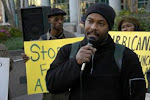
Friday, May 25, 2012
(Video) The Struggle to Realize Human Rights in the United States
Please note that this video is being posted for purposes of historical documentation. It was edited and produced by Northstar Productions under the direction of Kali Akuno in March 2012, then serving as the Co-Director of the US Human Rights Network.


Wednesday, May 23, 2012
The Jackson – Kush Plan and the Struggle for Black Self-Determination and Economic Democracy

Written by Kali Akuno
For the Malcolm X Grassroots Movement and New Afrikan People’s
Organization
Friday, May 4, 2012
“It
is with the intention of making a contribution, however modest, to this debate
that we present here our opinion of the foundations and objectives of national
liberation in relation to the social structure. This opinion is the result of
our own experiences of the struggle and of a critical appreciation of the
experiences of others. To those who see in it a theoretical character, we would
recall that every practice produces a
theory, and that if it is true that a revolution can fail even though it be
based on perfectly conceived theories, nobody
has yet made a successful revolution without a revolutionary theory.” – Amilcar
Cabral, The Weapon of Theory
The project of Afrikan or Black Liberation in the European
settler-colonial project called the United States is far from complete.
Despite the election of the first person of Afrikan descent to the executive
office of the United States government, and the progress this allegedly
entails, Black people remain at the top of virtually every social indicator of
inequality and inequity, with some critical gaps growing ever wider since the
onset of the manufactured financial crisis that struck in the mid-2000’s.
Despite the social gains won by the Black Liberation
Movement (BLM) in the 1950’s, 60’s, and 70’s with the forced dismantling of the
legal structures of white supremacy, securing the more challenging objectives of
the movement, particularly economic democracy[1]
and self-determination, have yet to be won. The challenge with economic
democracy and self-determination is that in order for them to be attained a
critical break with capitalism and the dismantling of the American settler
colonial project is required. Since the ebb of the BLM in the 1970’s as a
result of massive government repression, unrelenting white resistance, and the
fragmentation of the movement itself as result of the divide and conquer
tactics of its enemies and its own internal contradictions pertaining to
ideology, class interests, and sexual and gender inequality, the movement has
not been able to develop a comprehensive strategy and the level of mass
resistance needed to advance these particular objectives. However, to meet
these objectives the organized forces of the BLM most dedicated to their
pursuit have been compelled over the past 30 years to advance projects of
limited scale in order to maintain political position and regroup as a movement
to engage in protracted struggle to win economic democracy and
self-determination.
What follows is a presentation of one such project actively
being conducted by the Malcolm X Grassroots Movement (MXGM) and its parent
organization the New Afrikan Peoples Organization (NAPO) called the Jackson –
Kush[2] Plan.
The Jackson – Kush or J - K Plan is an initiative to build a base of autonomous
power in Mississippi concentrated in Jackson and the eastern
Black belt portions of the state that can serve as a catalyst for the
attainment of Black self-determination and the democratic transformation of the
economy.
Getting Started:
the Historic Background

The J - K Plan in its concrete form is the product of a self-generated
organizing challenge that emerged from the 2008 Ideological Conference of MXGM
and NAPO . The challenge was to test the
strength of our organizing model and work in the South after more than 25 years
of patient and deliberate work in key cities like Atlanta ,
Birmingham , and Jackson . The initial plan was to expand the
People’s Assembly model that was built in Jackson by MXGM and NAPO in the
aftermath of Hurricane Katrina and to run Peoples’ Attorney Chokwe Lumumba for
a City Council seat to assess the reach and impact of our work.
However, the J - K Plan also has many immediate and distant precursors
drawn from the New Afrikan Independence Movement (NAIM) in particular and the
BLM in general. Some of the most immediate sources of inspiration for the J - K
Plan were the initiatives to build a national Reconstruction Party in the
aftermath of Hurricane Katrina (first proposed by Saladin Muhammad in the
“Black Nations 9/11”[3]); the
campaign to run Malcolm Suber for a vacated At Large City Council seat in New
Orleans in 2007 as an independent under the Reconstruction Party banner[4]; the
work of MXGM members April and Cliff Albright in Selma, Alabama to build the Freedom
Party in the mid-2000’s; and the conceptual and organizing work of Baba Hannibal
Afrik and Dr. Demetri Marshall to develop the “Kush Plan” to organize the Black
belt portions of Mississippi and Louisiana.
A few of the precursors of the J – K Plan include the 1981
campaign of Provisional Government of the Republic of New Afrika (PG – RNA)
Southern Region Vice President, Kwablah Mthawabu, for Mayor in his home town of
Waterproof, LA in the Kush District. In
1993 former NAPO and MXGM Detroit, MI coordinator, Kwame Kenyatta, won a seat
on the Detroit School Board, which preceded his successful 2004 campaign for a
seat on the Detroit City Council.
Another key precursor was the formation of the Jackson Human
Rights Coalition in the late 1980’s. This coalition helped unseat white Mayor
Dale Danks who promoted and defended police brutality in the face of growing
opposition to police terror in Jackson’s Black Community. After Danks defeat,
another white mayor, Kane Ditto, was elected to replace him. Ditto also defended
police terrorism when white segregationist police officer’ Steve Wilson gunned
down community activist Johnny Griffin in front of several of Griffin’s
children in Jackson’s inner city community. Outcry over Griffin’s death
galvanized demonstrations against killer cops, and also sparked the
establishment of an Anti-Klan Coalition which challenged the KKK in
Mississippi. The Anti-Klan Coalition sponsored a mass rally and march that
successfully shut down the KKK’s attempted march on the Hinds County court
house in support of Wilson and police terrorism. The Griffin family and a legal
team led by MXGM Attorney Chokwe Lumumba won a legal settlement for Johnnie
Griffin’s wife and children in Federal Court.
In response to this pressure, Ditto hired Jackson’s first
Black Police Chief David Walker. Ditto hoped that hiring Walker would defuse
growing Black opposition to his administration. Indeed, Walker to Ditto’s
surprise launched an unprecedented campaign against police brutality. Several
police officers were fired and prosecuted for their abuse at Walker’s
initiative. Rather than embracing Walker’s positive work, he rejected it. Walker
was fired by Ditto only six months after he was hired. MXGM, NAPO, the Jackson
Advocate, and various others united to form a city wide coalition which
protested the firing of Walker with a city wide selective buying campaign.
Following this development, the Jackson Human Rights Coalition
organized a Grass Roots Convention designed to create a Self-Determination
agenda and to elect Jackson’s first Black Mayor. In 1993 the grassroots
convention selected renowned Black political activist Henry Kirksey to run for
Mayor. Unfortunately, Kirksey was betrayed by Black politician Harvey Johnson.
Once a participant in the grassroots convention, Johnson abandoned it and
announced he would run for Mayor after Kirksey was nominated by the convention.
Harvey Johnson and Kirksey were both defeated in 1993 due to the fragmentation
of the Black vote. Johnson, however, ran again in 1997 and won. These
experiences provided invaluable lessons for the development of the J – K Plan.
However, the principle foundational precursor of the J - K
Plan is drawn from the plans of the Provisional Government of the Republic of
New Afrika (PG-RNA) under the leadership of Dr. Imari A. Obadele in the early
1970’s to establish a new community called “El Malik” near Bolton, MS as the
capital of the Republic.
The J – K Plan builds on these immediate and historic
foundations and also a critical appraisal of the lessons, both positive and
negative, of the popular struggles for self-determination, economic democracy,
and social liberation throughout the world over the last 30 years, but
particularly in Africa, Asia, and Latin America . However, it was not until we succeeded in
electing Chokwe Lumumba to the Jackson City Council to represent Ward 2 on May
19th, 2009[5]
coupled with the growth of the People’s Assembly that was stimulated by this
electoral campaign that we decided to launch the J – K plan as it is envisioned
herein as a critical experiment in the struggle for Afrikan liberation.
Program or Pillars
The J – K Plan has three fundamental programmatic components
that are designed to build a mass base with the political clarity,
organizational capacity, and material self-sufficiency to advance the objective
of building an autonomous power. The three fundamental programmatic components
are:
- Building
People’s Assemblies
- Building
an Independent Political Party
- Building
a broad based Solidarity Economy
People’s Assemblies
The People’s Assemblies that MXGM and NAPO are working to build
in Jackson and throughout the state of Mississippi, particularly its eastern
Black belt portions, are designed to be vehicles of Black self-determination
and the autonomous political authority of the oppressed peoples’ and exploited
classes contained within the state. The Assemblies are organized as expressions
of participatory or direct democracy, wherein there is guided facilitation and
agenda setting provided by the committees that compose the People’s Task Force,
but no preordained hierarchy. The People’s Task Force is the working or executing
body of the Assembly. The Task Force is composed of committees that are
organized around proposals emerging from the Assembly to carry out various
tasks and initiatives, such as organizing campaigns (like Take Back the Land)
and long-term institution building and development work (like land trusts and
cooperative housing).
The People’s Assemblies model advanced by MXGM and NAPO as a
core component of the J – K Plan have a long, rich history in Mississippi and in the Black Liberation
Movement in general. The roots of our Assembly model are drawn from the
spiritual or prayer circles that were organized often clandestinely by enslaved
Afrikans to express their humanity, build and sustain community, fortify their
spirits and organize resistance. The vehicle gained public expression in Mississippi with the organization of “Negro Peoples
Conventions” at the start of Reconstruction to develop autonomous programs of
action to realize freedom as Afrikans themselves desired it and to determine
their relationship to the defeated governments of the Confederacy and the
triumphant government of the Federal
Republic
This expression of people’s power remerged time and again in
the New Afrikan communities of Mississippi
as a means to resist the systemic exploitation and terror of white supremacy
and to exercise and exert some degree of self-determination. The last great
expression of this vehicle of Black people’s self-determined power in Mississippi occurred in
the early 1960’s. It was stimulated by a campaign of coordinated resistance
organized by militant local leaders like Medger Evers that drew on the national
capacity and courage of organizations like the Student Non-Violent Coordinating
Committee (SNCC) and the Congress of Racial Equality (CORE). This campaign created
the democratic space necessary for New Afrikan communities in Mississippi to organize themselves to resist
more effectively. Broad, participatory based People’s Assemblies were the most
common form of this self-organization[7].
One of the most memorable outgrowths of this wave of Peoples Assemblies in
Mississippi was the creation of the Mississippi Freedom Democratic Party
(MSFDP), which challenged the hegemonic control over the Black vote on a state
and local level since the New Deal, and remains a vehicle that serves as a
constant reminder for the need for genuine Black equality and
self-determination to this day.

It is this legacy of People’s Assemblies that MXGM and NAPO are grounding ourselves in, and one we encourage
others, particularly those in the Occupy movement, to study to help guide our collective
practice in the present to build a better future.
Independent Electoral Politics
MXGM and NAPO firmly
believe that at this stage in the struggle for Black Liberation that to firmly
advance the causes of attaining economic democracy and self-determination, that
the liberation movement must be committed to building and exercising dual
power. And while we believe that the building of autonomous power outside of
the realm of the state (i.e. the government) in the form of People’s Assemblies
is primary, we also believe that engaging electoral politics on a limited scale
with the express intent of building radical voting blocks and electing
candidates drawn from the ranks of the Assemblies themselves is important. As
we have learned through our own experiences and a summation of the experiences
of others, we ignore the power of the state at our own peril.
However, it should be clear that we do not engage the
electoral system of the settler colony that is the state of Mississippi because we aim to legitimize its
existence or its claims to being a democratic institution. Rather, we engage it
first and foremost to try to negate its repressive powers and to contain the
dictatorial power and ideological influence of monopoly capital in Mississippi . From police
violence to the divestment of jobs and public resources, there are many
challenges facing our communities that require us to leverage every available
means of power to save lives and improve conditions. Secondly, we struggle to
engage it as a means to create political openings that provide a broader
platform for the struggles to restore the “commons”[8], create
more public utilities (i.e. universal health care and comprehensive public
transportation), and the democratic transformation of the economy to be waged. As
we are struggling against a state apparatus that is an edifice of white
colonial supremacy and neo-liberal in its orientation of governance, we are
clear that this combination of defensive and offensive struggles must be given
equal attention. If this perspective of critical struggle against the state is
not maintained, our initiatives could easily turn opportunist and fall victim
to becoming the latest Black-faced trend in the neo-liberal administration of
austerity.
Fundamental to our engagement with electoral politics is the
principle that we must build and employ independent political vehicles that are
not bound to or controlled by either of the two monopoly parties in the United States .
We are particularly focused on building an independent political party that
challenges the Democratic Party for the loyalty of the Black or New Afrikan
vote in the state of Mississippi . Although the Democratic Party in Mississippi is overwhelmingly Black, and highly
independent from the day to day operations of the National Democratic Party as
articulated by the Democratic National Committee, it is still a local tool of transnational
monopoly capital and an instrument for the operations of US imperialism “domestically” and
internationally. As such, it must be opposed by all those claiming to be
anti-racist, anti-colonial, anti-capitalist, and anti-imperialist. In the
effort to build on the legacy of independent electoral engagement by New
Afrikans in Mississippi, MXGM and NAPO are partisan members of the Mississippi
Freedom Democratic Party (MSFDP) and are starting to work as activists within
the party to transform it into a fully independent party (as many of its founders
originally envisioned) and extend its reach so that it eventually breaks the
hegemony of the Democratic Party over the Black electorate in Mississippi.
It is this combination of building and exercising dual power
– building autonomous People’s Assemblies and critical engagement with the
state via independent party politics – that are the two fundamental political pillars
of the J – K Plan.
To date, some of the accomplishments of this model beyond
the 2009 election of Chokwe Lumumba include leading the campaign to elect the
first ever Black Sheriff of Hinds County, Tyron Lewis, in August 2011[9];
leading the campaign to Free the Scott Sisters, which won their release in January
2011[10]; successfully
campaigned to save the J – Tran city public transportation in Jackson from
devastating austerity cuts planned by current Mayor Harvey Johnson; and united
with the Mississippi Immigrant Rights Alliance (MIRA) and other progressive
forces to pass an anti-racial profiling ordinance in Jackson and to defeat Arizona
styled anti-immigrant legislation in Mississippi in 2011 and 2012 respectively[11].
Solidarity Economy

The critical third pillar of the J – K Plan is the long-term
commitment to build a local Solidarity Economy that links with regional (like
the Southern Grassroots Economics Project) and national (like the US Solidarity
Economy Network) Solidarity Economy networks to advance the struggle for
economic democracy as a transitional means to the construction of socialism
(which we still define as “from each according to ability, to each according to
work”).
Solidarity Economy or Solidarity Economics is a concept that
emerged from social movements primarily in Latin America
in the 1980’s and 90’s fighting against the imposed austerity of neo-liberal
capitalism, the authoritarian order of the neo-colonial state regimes, and the countless
exploitative impositions of US imperialism[12].
Solidarity Economy as a concept describes a process of promoting cooperative
economics that promote social solidarity, mutual aid, reciprocity, and
generosity. It also describes the horizontal and autonomously driven networking
of a range of cooperative institutions that support and promote the
aforementioned values ranging from worker cooperatives to informal affinity
based neighborhood bartering networks.
Our conception of Solidarity Economy is inspired by the
Mondragon Federation of Cooperative Enterprises based in the Basque region of Spain [13].
Our conception attempts to draw from the best practices and experiences of the
Mondragon system and combine them with the best practices and experiences of
the Solidarity Economy and other alternative economic initiatives already in
motion in the United States .
Our struggle in part is to make these practices and
experiences relevant in Jackson and Mississippi Black belt on the one hand. And
on the other to make greater links with existing cooperative institutions
(again like the Southern Grassroots Economies Project and the Federation of
Southern Cooperatives) in the state and the region to extend and broaden their
reach and impact on the local and regional economy. The practices and
experiences that MXGM and NAPO are working to organize based on our assessment of
the aforementioned examples and what we think would be the most relevant and
translatable in the Jackson
context consist of the following:
- Building
a network of cooperative and mutually reinforcing enterprises and
institutions, specifically worker, consumer, and housing cooperatives, and
community development credit unions as the foundation of our local
Solidarity Economy
- Building
sustainable, Green (re)development and Green economy networks and enterprises,
starting with a Green housing initiative
- Building
a network of local urban farms, regional agricultural cooperatives, and
farmers markets, drawing heavily from recent experiences in
- Developing
local community and conservation land trusts as a primary means to begin
the process of reconstructing the “Commons” in the city and region by
decommodifying land and housing as a means of transforming property
relations and subjecting privately appropriated social production to
democratic processes
- Organizing
to reconstruct and extend the Public Sector, particularly public finance
of community development, to be pursued as a means of rebuilding the
Public Sector to ensure there is adequate infrastructure to provide
quality health care, accessible mass transportation, and decent,
affordable public housing, etc.
In building along these lines we aim to transform the
economy of Jackson
and the region as a whole to create the material base needed to support and
build the autonomous politics we are pursuing. But, we see that Solidarity
Economy, if developed to its own logical conclusions, represents the limit of
economic reform possible within a capitalist framework of social production
governed by a bourgeois social order. We are clear that in order to build
socialism that something more than just the principles and institutions of
economic and social solidarity will be needed. What we believe will be needed
are new political and social identities crafted on the transformation of
consciousness produced in part by engaging in the practices associated with
Solidarity Economy and radical participatory and horizontal democracy. Solidarity
Economy when pushed to its limits as a means of heightening contradictions within
the capitalist system we believe is a transitional strategy and praxis to build
21st century socialism and advance the abolition of capitalism and
the oppressive social relations that it fosters.

Turning Theory
into Action: Organizing Campaigns and Alliance Building
The three fundamental program components or pillars of the J
– K Plan can only and will only be built through grassroots organizing and
alliance building. The key to the organizing component of the overall plan is
the launching and successful execution of several strategic and mutually
reinforcing organizing campaigns. The most critical of these organizing
campaigns are as follows:
- The
Amandla[14]
Education Project
- Take
Back the Land
- Operation
Black Belt
- 2013
Electoral Campaigns
The Amandla Education Project
The Amandla Project is a youth and community education
project specializing in organizing training, political education, and skill
building for civic engagement and participation. The Project provides training
to youth and community members in the People’s Assembly and the broader civil
society in Jackson on community organizing, conflict resolution, critical
literacy, media literacy, journalism and media advocacy, political theory,
political economy, human rights advocacy, cooperative planning and management,
participatory budgeting, the principles and practices of solidarity economy,
sustainable economic development, and ecological sustainability. The Project
also specializes in teaching the deep and rich history of struggle by New
Afrikan people in Jackson and Mississippi in general, to liberate themselves
from white supremacy and colonial domination and the assimilation of lessons
from these struggles that can be employed today to advance the liberation
movement.
In its first year, the Amandla Project will recruit, train,
and organize 100 youth and community organizers. These 100 individuals will
serve as the core organizing cadre for the J – K Plan. Our objective is to
place 10 organizers in each of Jacksons 7 Wards and to utilize the remaining 30
to enhance the overall organizing capacity of progressive forces in the state
of Mississippi.
These organizers will be trained by a team of experienced
organizers drawn from the ranks of MXGM, Mississippi Chapter of the National
Association for the Advancement of Colored People, Mississippi Workers Center
for Human Rights and other allied organizations that support the People’s
Assembly and the J – K Plan.
Training 100 organizers is a critical start, but is in no
way sufficient to meet the comprehensive needs of the J – K Plan. To develop
and train the cohorts and cadre of organizers needed to realize the objectives
of this plan, MXGM, MS NAACP and the Praxis Project are working in alliance to
build a training school by the start 2013 that will serve as the cornerstone of
this long term educational initiative.
The Take Back the Land Campaign
The Take Back the Land campaign is an initiative to create a
network of urban farms and farmers markets to promote a healthy diet,
affordable produce, and food sovereignty in the city. It also aims to create a
land trust network, cooperative housing, and a workers cooperative network to
provide a base of employment for many of the un and under employed.
The Take Back the Land campaign will focus on occupying
vacant land, abandoned homes and industrial facilities and convert them into
usable agricultural land for urban farming, refurbished green housing to
establish a cooperative housing network, and community space to establish
training facilities, business centers and recreation spaces.
Aspects of this campaign have already been launched by MXGM
with the healthy foods initiative and Fannie Lou Hammer gardens project. This
initiative is also conceptually linked with the primary aim of the New Afrikan
Independence Movement (NAIM), which MXGM and NAPO are a part of, to “Free the
Land”, meaning the creating of an area in the Black Belt South to exercise New
Afrikan sovereignty. It is also linked to the National Take Back the Land
Movement that was launched in 2009 by the Land and Housing Action Group (LHAG)
of the US Human Rights Network (USHRN), which originally consisted of MXGM, Survivors Village
Operation Black Belt
Operation Black Belt is a campaign to organize the oppressed
peoples’ and exploited classes in the South, particularly concentrating on
organizing Black workers in the region who form the core of the oppressed Black
or New Afrikan nation that has been super exploited for centuries, into militant
class conscious and social movement based worker associations and unions. This campaign is being initiated by MXGM with
the support of the Malcolm X Solidarity Committee (MXSC), which is a North
American anti-imperialist formation under the discipline of NAPO .
The campaign is being launched in the state of Mississippi
and key cities along the Mississippi river to
organize Truckers and Transport workers and help strengthen the organization of
Longshore and various Port workers.
This campaign is starting with an initiative to organize workers
in the transport industry, primarily because of its strategic nature to the
economy of Jackson , the Southern Region, and
ultimately the United States
as a whole. The Mississippi river port network, running from Minneapolis to New
Orleans is the largest single river based trade nexus in the world. This nexus
is as essential to world trade as it is to the economy of Jackson . We believe that we can strategically
leverage the labor power of workers in and around Jackson – which is strategic to
this Nexus as it connects the Port of Vicksburg with the intersection of
Interstate Highways 20 and 55 and numerous rail lines – as a means of intervening
in the circuit of capital that flows through it to improve the material lives
of workers in the city and the Black belt region running from New Orleans to
St. Louis, and from here strengthen the hand of labor in the US empire.
The long-term objective of this campaign is to challenge,
and eventually overturn, the “right to work” laws and policies in Mississippi
(and throughout the South). These laws and polices play a major role in
sustaining the extreme rates of poverty and health disparities in the state,
and must be overturned in order to improve the living standards of the vast
majority of its residents. MXGM and the People’s Assembly aim to partner with
the Mississippi Workers Center for Human Rights to build and expand this
critical long-term campaign.
2013 Electoral Campaigns
For the 2013 City Elections in Jackson ,
the Jackson People’s Assembly, MXGM, and NAPO
are prepared to run two candidates under the banner of the Mississippi Freedom Democratic Party (MSFDP). One candidate, Attorney Chokwe Lumumba, who
currently serves as the City Councilman for Ward 2, will run for Mayor. The
other candidate is June Hardwick, who is also an Attorney, will run for City
Council in Ward 7.
The objective of running these candidates and winning these
offices is to create political space and advance policy that will provide maneuverable
space for the autonomous initiatives promoted as part of the J – K Plan to
develop and grow. They are also intended to be used to build more Ward based
People’s Assemblies and Task Forces in Jackson, base build for the overall
plan, and raise political consciousness about the need for self-determination
and economic democracy to solve many of the longstanding issues effecting New
Afrikan people.
In order to create the democratic space desired, we aim to
introduce several critical practices and tools into the governance processes of
the Jackson city
government that will help foster and facilitate the growth of participatory
democracy. Some of these processes and tools include:
- Participatory Budgeting to allow
the residents of
- Gender-Sensitive Budgeting to
address the adverse impact of policy execution as reflected in budget
priorities that negatively impact women and children
- Human Rights Education and Promotion will
require all city employee’s to undergo human rights training to ensure
that their policies and practices adhere to international standard of
compliance with the various treaties ratified by the United States
government and the results based norms established by the United Nations
We also aim to make several critical structural changes to
the city of Jackson ’s
governance structure. The most critical change we will propose and fight for is:
·
Creating a Human Rights Charter to replace the
existing city charter as the basis of sovereignty and governance for the city (our
Human Rights Charter conception draws heavily from the Human Rights Charter
campaign work of our allies the Atlanta Public Sector Alliance – APSA)
And finally we aim to advance several economic and social
changes on a structural level in Jackson
via the governance process. These include:
- Expanding
Public Transportation, by increasing transport lines and launching a fleet
of green vehicles that utilize natural gas, ethanol, and electric energy
- Creating
a network of solar and wind powered generators throughout the city to
expand and create a sustainable power grid
- Creating
a South-South Trading Network and Fair Trade Zone, that will seek to
create trading partnerships with international trading blocs such as
CARICOM (the Caribbean Community and Common Market) and ALBA (the
Bolivarian Alliance for the
Following the example of Malcolm X and countless Black
political strategists and organizers before and after him, MXGM and NAPO are major proponents of principled alliance building
and united front politics. We are clear that none of our strategic objectives
and demands can be attained simply by the forces we can muster. And few of our
transitional goals and objectives can be reached without creating substantive alliances
with strategic partners and allies. The J – K Plan, as a transitional plan, is
no exception to the rule.
In order for the J – K Plan and its objectives to be
realized, we are going to have to build a broad alliance in the city, the Black
belt counties, and throughout the state that is aligned with the principle aims
of the Plan and the initiatives that emerge from the People’s Assemblies. This
alliance will intentionally be multi-national in its outlook and orientation,
but be based in and lead by New Afrikan working class communities and forces throughout
the state. We assess our strategic allies being the growing Latino community and
various immigrant populations that are migrating to the state seeking
employment in the agricultural, construction, and professional service sectors.
The strategic nature of these forces rests with our common interest in
eradicating white supremacy and the institutional dimensions of colonial
subjugation that structure the economy. This alliance will also give due focus to
building principled relationships with white progressive forces throughout the
state who are essential to the current and foreseeable balance of power in the
state. Our immediate aim is to win enough of these forces over to our vision
and program so as to weaken, if not altogether neutralize, aspects of white
reactionary power in the state.
The objectives of the J – K Plan require the building of
coalitions and alliances that far exceed the borders of the settler state of Mississippi . We envision
the coalitions and alliances we are seeking to build in Mississippi
as being an essential cornerstone to the building of a strategic South by Southwest
radical peoples’ alliance, rooted in the rebuilding of principled alliances
amongst the primary colonial subjects of the U.S. settler-colonial empire,
namely New Afrikans, Xicanos, and Indigenous Nations. When and if linked with
the growing immigrant population, this grand alliance possesses within it the
potential to transform the United
States , via decolonization and economic
restructuring, into an entirely new social project.
Solidarity and
Joint Struggle: What You can do to help promote and advance the J – K Plan
MXGM and NAPO believe that
for organizing initiatives like the J – K plan to be successful, it will take a
balance of self-reliant initiative, will and resourcing combined with genuine
solidarity and joint struggle on the part of our allies. To help see this
initiative to fruition, we are calling on our allies and supporters to build
with us in the following concrete ways:
Promotion and Education
The first critical task is to spread the word about the J –
K plan. Promote it amongst your family, friends and comrades and wherever you live,
work, play, rest or pray. Promote the democratic potential the plan represents
and educate people about the importance of this initiative, the lessons that
can be learned from it, how it can be applied in their context, and how they
can support it.
Resource Generation
No major social initiative such as the J – K plan can
succeed without resources. The J – K plan needs a broad array of resources, but
the two most fundamental resources it needs are skilled volunteers and money
(capital).
The types of skills we need are organizing, managerial,
fundraising, entrepreneurial, and technical in the fields of social networking,
farming, construction, engineering, journalism and media, and health care. We
are looking for volunteers to come to Jackson and other parts of Mississippi
and make commitments to help at strategic times for short-term campaigns,
mainly one or two weeks. And to make more long term commitments for several
months or years to work under the discipline of MXGM, NAPO ,
and the People’s Assemblies.
We need money for a great number of things, but more
specifically to help support and build our organizing drives and campaigns, which
includes paying organizers, covering work expenses (transportation, operations,
facilities, etc.), and producing and promoting educational and agitation
materials. If all our allies and supporters were to make small individual
donations, we firmly believe we could raise millions to support this critical
work. In this spirit, we are challenging everyone who supports the J – K plan
and the work of MXGM and NAPO to make a
contribution of $5 or more to this work to ensure that it succeeds. You can
make a tax deductible contribution by donating to Community Aid and
Development, Inc., which is our 501c3 fiduciary agent, by visiting http://www.cadnational.org/. Donations to the support the Chokwe Lumumba
Campaign for Mayor can be made out to the Committee
to Elect Chokwe Lumumba and sent to P.O. Box 31762 Jackson, MS 39286. Donations
to the Campaign to Elect June Hardwick for Ward 7 can be made out to Friends to Elect June Hardwick and sent to
P.O. Box 1352 Jackson, MS 39215.
Solidarity and Joint Struggle Campaigns
Political support for the J – K plan and the many
initiatives within it is just as essential as resource support. We strongly
encourage folks in the South to join us in building and extending Operation
Black Belt, as this campaign ultimately needs to be a Southern wide initiative
in order to be successful. The Amandla Project would aid from book and
curriculum donations, pedagogical exchanges, and volunteer trainers to help it
get started. We further call on our allies and supporters everywhere to support
our 2013 electoral campaigns by joining one of our volunteer brigades that will
start in the summer of 2012 to carry out the will of the People’s Assembly. And
of course make generous financial contributions to the campaign coffers of
Chokwe Lumumba and June Hardwick.
More critically however, we would like to encourage our
allies and supporters outside of Mississippi
to form local and regional J – K
Solidarity Circles to support the Plan and relate directly with MXGM, NAPO and the People’s Assembly to support some or all of the
aforementioned initiatives. We want to strongly encourage organizing and
organizational development anywhere to enable social transformation to happen
everywhere.
We are also looking to inspire, encourage, and support J – K
like plans in other Black belt regions of the South. In particular, Black belt
regions with mid-sized towns like Jackson with similar race and class
demographics, as these represent the greatest potential for success given the
current balance of forces in the US, if only because these cities don’t possess
the same degree of consolidated transnational capital to contend with. We would
hope that over time J – K Solidarity Committees throughout the Black Belt South
would take up this call to action and build their own local political bases of
support to engage in dual power initiatives that can link with the forces
advancing the J – K Plan to liberate the South.
If people would like to work more closely with MXGM and NAPO to build the J – K Plan we strongly encourage people
of Afrikan descent to join MXGM. People interested in joining should contact
our national organizer Kamau Franklin at kamauadeaabiodun@yahoo.com. We
strongly encourage whites and other non-Afrikan peoples’ committed to
anti-racist, anti-imperialist, anti-sexist politics interested in working
directly with us to join the Malcolm X Solidarity Committee (MXSC). People
interested in joining the MXSC should contact malcolmxsolidaritycommittee@gmail.com.
Forward!
As this paper hopefully demonstrates, the J – K plan is a
major initiative in the effort to rebuild the Black Liberation Movement to
complete the project of Afrikan liberation on the North American Continent.
To the extent that this plan calls for a critical engagement
with the US settler-colonial
state, we take heed of the lesson and warning issued by our dear fallen comrade
Walter Rodney, who stated in regards to his organizing efforts to transform his
native Guyana :
“I
say this very deliberately. Not even those of us who stand on this platform can
tell you that the remedy in Guyana Guyana
We draw two lessons from this statement and the history
associated with it. One, that to engage is to not be deluded about the
hypocritical and exploitative nature of the system, nor deny its proven ability
to contain and absorb resistance, or to reduce radicals to status quo managers.
The lesson we draw from Rodney’s statements are that we have to fight in every
arena to create democratic space to allow oppressed and exploited people the
freedom and autonomy to ultimately liberate themselves. The second lesson
regards leadership. MXGM and NAPO believe that leadership is necessary to help
stimulate, motivate, and educate struggling people, but that leaders and
leadership are no substitutes for the people themselves and for autonomous mass
movement with distributed or horizontal leadership. As the legendary Fannie Lou
Hammer said, “we have enough strong
people to do this. For peoples to win this election, it would set a precedent
for other counties in the state. Peoples need a victory so bad. We’ve been
working here since ’62 and we haven’t got nothing, excepting a helluva lot of
heartaches.” [16]
The J – K Plan is ultimately one that aims to build a strong
people, prepared to liberate themselves. We hope you will join us in its
building and advancement.
Unity and Struggle!
For updates and more information about the Jackson – Kush
Plan please visit the following websites and social media sources:
Campaign to Elect Chokwe Lumumba https://www.facebook.com/pages/Elect-June-Hardwick-for-Ward-7-City-Council/#!/ElectChokweLumumbaMayorOfJacksonMs
Navigating the Storm http://navigatingthestorm.blogspot.com/
[1] Economic
Democracy here means the political process of
transforming the private ownership and appropriation of the means of
production and distribution to ensure that the workers and direct producers own
and control these means and processes and determine the conditions of their
labor, how their product is exchanged and distributed, and how any surplus
valued produced is appropriated. In
short is describes the political process by which socialism and communism are
to be attained.
[2] Kush is
a name appropriated by partisans in the New Afrikan Independence Movement from
an ancient Nile based civilization which would be in present day Egypt and
Sudan, to designate the span of contiguous Black majority or Black belt
counties along the Mississippi river in the states of Mississippi, Louisiana,
Arkansas and Tennessee. This area has been designated or renamed the Kush
District.
[4] See http://www.thenation.com/article/malcolm-suber-good-new-orleans
for some brief background on this campaign.
[5] For more information on Chokwe’s victory see http://panafricannews.blogspot.com/2009/05/former-detroiter-atty-chokwe-lumumba.html
or http://www.jacksonfreepress.com/index.php/site/comments/runoffs_provide_decisive_wins_052009/.
[7] See
“I’ve Got the Light of Freedom: the Organizing Tradition and the Mississippi
Freedom Struggle”, by Charles M. Payne; “Local People: the Struggle for Civil
Rights in Mississippi ”,
by Charles Dittmer; “The Origins of the Civil Rights Movement: Black
Communities Organizing for Change”, by Aldon D. Morris; “A Little Taste of
Freedom: the Black Freedom Struggle in Claiborne County, Mississippi”, by
Emilye Crosby; and “Freedom is an Endless Meeting: Democracy in Action in
Social Movements”, by Francesca Polletta.
[8] The
“Commons” refers to the resources of the earth that everyone is dependent upon
and must utilize to survive and thrive. The essential “Common’s” are land,
water, and air.
[9] See
Black Agena Morning Shot August 29, 2011 interview with Kamau Franklin by Kali
Akuno at http://youtu.be/IIJcginZkpw.
And “Lewis prepares for the Future”, by Elizabeth Waibel at http://www.jacksonfreepress.com/index.php/print_view/47994.
[10] See
“Lumumba says Scott sisters released because of supporters” at http://youtu.be/oXBm_szT_5E. And “Scott
Sisters Finally Set Free” at http://colorlines.com/archives/2011/01/scott_sisters_finally_set_free.html.
[11] See “A
New Kind of Southern Strategy”, by Susan Eaton at http://www.thenation.com/article/162694/new-kind-southern-strategy.
[12] For
more information on Solidarity Economy see the works of Ethan Miller,
particularly “Solidarity Economy: Key Concepts and Issues” at http://www.communityeconomies.org/site/assets/media/Ethan_Miller/Miller_Solidarity_Economy_Key_Issues_2010.pdf.
[14] “Amandla”
is a Xhosa or Zulu word for “Power”. It is used in a fashion similar to the
slogan, “Black Power” by the BLM in the United States . It is used in call
and response form, and the response is “Awethu”, which means “to us”. Combined
it means “Power to the People”, as made popular in the United States
by the Black Panther Party for Self-Defense. This slogan was and remains common
in the Azanian (i.e. South African) Freedom Movement.
[15] For
more background on the National Take Back the Land Movement and its history
visit http://navigatingthestorm.blogspot.com/
or http://www.takebacktheland.org/.
[16] Quote
taken from “This Little Light of Mine: The Life of Fannie Lou Hammer”, by Kay
Miles, page 176.

Download the Document at
Sunday, May 20, 2012
No More Trayvons Campaign calls for National Plan of Action for Racial Justice

Monday,
May 21, 2012
Worldwide
attention has been focused on the killing of Trayvon Martin, an unarmed Black
youth, by George Zimmerman, a self-appointed neighborhood watch captain in
Sanford, Florida on Feb. 26. 45 days
after the local police department refused to arrest Zimmerman on the charge of
murder, Zimmerman turned himself in to authorities after national media
coverage looked into the case; various petitions/signature gathering events;
dozens of global demonstrations and marches; and the shake-up of various
officials and the appointment of a special prosecutor.
This
scenario is unfortunately the norm and not an anomaly in the U.S. When it comes to the murder of Black people
by law enforcement and racist vigilantes, tremendous amounts of resources,
energy and pressure must be applied simply to initiate the process of holding
individuals accountable for their crimes.
Within
the United States historically, local law enforcement agencies and vigilante
hate groups such as the Ku Klux Klan have operated as parallel organizations
and as “mutually reinforcing types of organizations.” In his book Our Enemies in Blue: Police and Power in America, author and
activist Kristian Williams writes that “… historically, police offer a degree
of validation to Klan activity … by refusing to treat racist violence as a
crime. At times the police have supplied
the institutional nucleus around which vigilante activity could orbit.”
Since
the killing of Trayvon Martin, research compiled by the Malcolm X Grassroots Movement
has shown an epidemic of at least 23 Black men and women who have been murdered
by local law enforcement, security personnel, and self-proclaimed “keepers of
the peace.” In all, over 40 Black women and men have been killed by these
forces since January 1, 2012. Within the U.S., murder – the unlawful killing of
human beings – is usually determined by a jury in a court of law however very
few law enforcement personnel have ever been charged with murder while
performing their jobs. Police murder is
simply not considered a crime.
To
address this epidemic of police murder, it is imperative that the Obama
Administration immediately implement a National Plan of Action for Racial
Justice. This national plan of action must consist of 1) a national database to
document the killing of Black people by the police; 2) eliminate racial
profiling; and 3) ending the policies of mass incarceration targeting Black
people.
“There
is only one way to address the upsurge of racist violence being committed
against Black people, Latinos, Arabs, Muslims, and immigrants in this country”,
says Kali Akuno, organizer with the Malcolm X Grassroots Movement, “and that is
for the Obama administration to implement a National Plan of Action for Racial
Justice that addresses all levels of government and demands compliance with all
the provisions of the CERD treaty. All the resources being used to enforce racially-biased
policies like S-Comm (Secure Communities) or stop and frisk throughout the
country can just as easily be used in fact to end racial violence and
discrimination.”
The
International Convention on the Elimination of All Forms of Racial
Discrimination,(ICERD, or more commonly, CERD), is an international treaty
designed to protect individuals from discrimination based on race, whether that
discrimination is intentional, or is the result of seemingly neutral policies.
The United States ratified CERD in 1994 and is therefore bound by all
provisions of the treaty. The National Plan of Action would provide the Obama
administration with the means to implement the general recommendations of the
CERD. National Plans of Action for Racial Justice are a product of the World
Conference against Racism held in Durban, South Africa in 2001.
Currently
in the U.S., there exists no independent, national human rights institution
that could serve as a check on domestic human rights abuses. A National Plan of Action for Racial Justice
should pave the way for the establishment of such an institution that would be
in accordance with United Nations principles that the U.S. has already
accepted.
Additionally,
no national, independent mechanisms are currently established for the
monitoring of police abuses within the United States. Given the history of
racial antagonisms in the U.S. and along the border with Mexico, a National
Plan of Action for Racial Justice must make its priority the reporting of
police brutality and excessive use of force; that the allegations are
independently, promptly and thoroughly investigated; and that the perpetrators
are prosecuted and appropriately held to a count.
We are
calling on all those who genuinely seek justice for Trayvon Martin; all those
who truly want a concrete “next step” to prevent future Trayvon Martins, to
join us in this demand to hold the United States government accountable for its
failure to fully address the systemic problem of institutionalized racism.
We are
calling for people of goodwill across the nation to endorse the demand for a
National Plan of Action for Racial Justice.
The Malcolm X Grassroots Movement and its allies will be delivering a
petition to the Obama administration in June demanding that it implement a
National Plan of Action for Racial Justice. "It is time that the US government
play by the same rules and standards that it demands of other nations around
the world", says Kali Akuno. "The US government must respect, protect
and fulfill the human rights of everyone person under its jurisdiction to
ensure that there are No More Trayvon Martin's, and we intend on demanding
compliance to ensure that it does so."
For more
information about the Petition for a National Plan of Action visit http://mxgm.org/trayvon-martin-is-all-of-us/.
For more
background information on What A National Plan of Action for Racial Justice is
visit http://mxgm.org/the-national-plan-of-action-for-racial-justice-short-explanation-of-what-it-is/.

To
contact the Malcolm X Grassroots Movement call Kali Akuno 510.593.3956 or email
kaliakuno@mxgm.org.
##
Saturday, May 19, 2012
Local Struggles: Organizing for the National Plan of Action for Racial Justice at the City, County, and State Level

The fight for a National Plan of Action for Racial Justice
is not just a fight targeting the federal government. Nor is it a fight to just
create more government policies and institutions for monitoring rights abuses
with few resources and no real accountability measures. This fight is
ultimately a local fight, one that must be waged
and won on every block, neighborhood, city, county, and state.
The “national” component of the demand for a National Plan
of Action for Racial Justice is to ensure that no one state can opt out of
complying with the demands for racial justice. We want to make sure that there
is no recourse to “state’s rights”, which have been used for centuries to
reinforce white supremacy and apartheid, particularly in the south and the
southwest against Indigenous nations, New Afrikans and Xicanos.
The demand for a National Plan of Action for Racial Justice
is a demand for structural change at every level of government – city, county
(parish, borough, etc.), state, and federal. But, as already stated, it must
first be waged and won on a local level. This
battle starts with individuals and organizations adopting the demand for a
National Plan of Action for Racial Justice. Upon adoption, individuals and
organizations must then engage in mass outreach to educate more people about
the National Plan of Action framework and what it would enable. Following the
education work, the next step is to organize people to support a campaign of
struggle to win the demand. After you have established a base of organizers to
wage this campaign, the next step is to build strong local coalitions that are
prepared to engage in various self-defense activities and offensive campaign
initiatives that seek to transform the institutions and practices of local,
county, and state governments by having them adopt action plans for racial
justice.
Some of the initiatives of self-defense that are suggested
entail:
- · Organizing Cop or Police Watch forces that canvass communities and directly monitor police practice, document police harassment (i.e. racial profiling, stop and frisk, etc.) and abuse, and serve as deterrence against police terrorism, particularly in communities of oppressed peoples.
- · Organize Peoples Self-Defense Coalitions and Campaigns that seek to: a) educate communities to know their fundamental human rights and their basic civil rights as a means of providing protection against police and other forms of state terrorism (i.e. surveillance, entrapment, etc.), b) create legal coalitions and clinics to partner with Cop or Police Watch forces to fight cases of police terrorism, and c) serve as an organizing base to launch local legislative campaigns and initiatives.
- · Organize People’s Hearings or Tribunals to thoroughly document local incidences of police terrorism and state repression to continue to educate and inform local communities and to gather evidence that can be used to pursue legal remedies both domestically (in US courts) and internationally (through Inter-American Commission or the United Nations) the and to reinforce demands of various organizing campaigns.
Some of the offensive campaign initiatives suggested entail:
·
Campaign
for City, County, or State level
Plans of Action for Racial Justice that would entail:
o
The creation of comprehensive Police Control
Boards, that are elected by local communities and possess definitive authority
over the police, including the power to fire and take legal and other
corrective action against the police for violations of human rights.
o
Local control ordinances and legislation that
would specifically stop repressive policies like “stop and frisk”, racial
profiling, programs like secure communities or S COMM of Homeland Security[1],
and local law enforcement collaboration with Fusion Centers[2].
o
The creation of Human Rights Commissions that
would legally be empowered to ensure that local, state, and regional laws and
practices comply with international law and standards of protection for
oppressed peoples and groups (racialized communities, Indigenous peoples,
oppressed peoples and nations, immigrants, etc.).
o
The creation of Human Rights Charters for city, county,
and state governments that refashion the articles of incorporation and
constitutions that establish the legal framework for these entities to ensure
maximum protections for Indigenous and oppressed peoples residing in these
locales.
These are just a few ways in which the demand for a National
Plan of Action for Racial Justice can be and is relevant to local, statewide,
and regional struggles for social justice. The Malcolm X Grassroots Movement
(MXGM), Black Left Unity Network (BLUN), and the National Alliance for Racial
Justice and Human Rights (NARJHR) calls on every individual, organization,
coalition, alliance, or network that believes in racial justice and is fighting
to liberate oppressed peoples in this country to join us in the effort to fight
for a National Plan of Action for Racial Justice to ensure that there are NO
MORE TRAYVON MARTINS.
For more information on the No More Trayvon Martins Campaign
visit www.mxgm.org.
To sign the petition for a National Plan of Action for
Racial Justice visit http://mxgm.org/trayvon-martin-is-all-of-us/.
To endorse the campaign email kaliakuno@mxgm.org. To get
started on organizing on its behalf see the tasks outlined in our Appeal Letter
at http://mxgm.org/no-more-trayvon-martins-campaign-appeal/.
[1]
For more information on the Secure Communities program visit http://www.nnirr.org/~nnirrorg/drupal/End-S-COMM.
[2]
For more background on what Fusion Centers are visit http://www.aclu.org/technology-and-liberty/whats-wrong-fusion-centers-executive-summary.
Subscribe to:
Posts (Atom)

 Posts
Posts