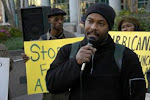
Notice the tragic comedy and irony. South Africa is NOT in a recession, even though it's official unemployment is over 20%.
- Kali
South Africa's leader Kgalema Motlanthe has said the G20 summit had taken some decisive and courageous steps.
The world leaders pledged $100bn in aid for developing countries and promised to give more voice to developing countries in economic decision-making.
Mr Motlanthe said the deal focused on ways to avoid unemployment and acknowledged the importance of emerging markets to boost trade.
But it might not be adequate to address the full extent of the crisis, he said.
South Africa, which has so far avoided a recession, is the only African country in the G20.
“ You can't shave somebody's head in his absence... In an almost 30-page communique, Africa is not even mentioned ”
Kenyan economist Oduor Ong'wen
"We have as the central pillar of the recovery plan the saving of jobs because there's a recognition that this summit could not only focus on technical aspects of the economy but that the economic meltdown affects people, affects ordinary working people," the South African president said.
Economists have been warning that up to 300,000 jobs could be lost this year, pushing South Africa's unemployment up from the current level of 22%.
Other developing countries have suffered from a downturn in tourism, remittances from workers living abroad, and the collapse of commodity prices.
'Fire-fighting'
"I don't see much in terms of rescue for Africa," Kenyan economist Oduor Ong'wen of the the Southern and Eastern African Trade Information and Negotiations Institute told the BBC's Network Africa.
NEW FUNDING PLEDGES
$500bn for the IMF to lend to struggling economies
$250bn to boost world trade
$250bn for a new IMF "overdraft facility" countries can draw on
$100bn that international development banks can lend to poorest countries
IMF will raise $6bn from selling gold reserves to increase lending for the poorest countries Source: BBC
"You can't shave somebody's head in his absence... In an almost 30 page communique, Africa is not even mentioned.
"In as far as it is fire-fighting it is OK, but we have to go behind what caused the fire," he said.
But Stephen Gelb, executive director of South Africa's Edge Institute think tank, says as well as the aid package, the $750bn to the International Monetary Fund and the $250bn to boost global trade will have an impact on Africa.
"It will make a rapid difference to the flow of trade because trade has been suffering from a lack of credit to importers and exporters," he told the BBC.
He said his greatest fear is protectionism, which has been creeping in despite promises from richer nations not to do so.
Nigerian businessman John Adeleke sees the tripling of the IMF's funds as a mistake.
"I think some of the most successful developing countries have advanced in spite of the IMF and a lot of the failures have been failures that were perhaps mismanaged by a lot of the [IMF] advice," he told the BBC's World Today.
In a speech after the summit, US President Barack Obama announced that he aims to double US food and agriculture aid to Africa and other poor regions to more than $1bn.
Story from BBC NEWS:
http://news.bbc.co.uk/go/pr/fr/-/2/hi/africa/7980910.stm
Published: 2009/04/03 10:19:31 GMT
Saturday, April 4, 2009


Friday, April 3, 2009
The April Fools Agreement: the G20 Summit, NATO and the Durban Review Conference
Fairly cogent analysis of the April Fools agreement.
Now that the capital reforming meeting is over, Obama is now trying to reconsolidate imperialism's chief military coalition, NATO. All the while he and his administration are working diligently to undermine the third major meeting being held in old imperial Europe in April, the Durban Review Conference (DRC).
To date the administration has outflanked the Non-Aligned Movement/G77, one of the main forces behind the DRC/WCAR, and got the DRC committee to water down the Outcome Document (removing all mention of reparations) and organize as many as 52 nation-states (mainly from the EU) to potentially boycott the conference if it conference doesn't denounce the Durban Declaration and Plan of Action in 2001 in its entirety (which took strong positions on reparations, indigenous sovereignty, Palestinian self-determination, and caste).
We cannot allow Obama and the imperial camp to get away with this. We need act. To that end, I want to suggest the following:
1. Organize a demonstration, teach-in or forum on the Durban Review Conference and the Durban Declaration and Plan of Action between now and April 25th.
2. Sign and promote the following petitions:
- Black Left Unity Petition http://www.petitiononline.com/Durbanii/petition.html
- Human Rights Project at the Urban Justice Center http://www.thepetitionsit.com/1/why-the-united-states-should-stop-refusing-to-participate-in-a-global-conference-on-racism
3. Support the National Day of Action being organized by TransAfrica Forum and call the Obama Administration on Wednesday, April 8th to demand that the administration attend the conference and adopt the Durban Declaration and Plan of Action.
4. Incorporate the Durban Declaration and Plan of Action and the 2008 Committee to Eliminate Racial Discrimination (CERD) recommendations into your organizations local, regional, and national plans of action.
5. Engage in CERD compliance monitoring and documentation locally, regionally, and nationally.
6. Stay informed. Checkout the United Against Racism Facebook Page regularly for updates and action items at http://www.facebook.com/group.php?gid=68920846409&ref=ts
7. Join the US Human Rights Network (USHRN) to build a peoples centered human rights movement in the United States.
In Unity and Struggle,
Kali
------------------------------------
A summit that shows the new balance of power
New alliances are forming, old ideologies are dying, the world is now a different place. Mary Dejevsky looks at the lessons of the G20
Friday, 3 April 2009
Multilateralism and its institutions are back
Not only did the leaders of the 20 richest countries in the world all find time in their diaries to come to London, but most of the action they announced yesterday is to be channelled through existing international organisations – chiefly the IMF and the World Bank. If everyone honours their pledges, institutions that seemed on the verge of redundancy only a few years ago will soon find themselves awash with new cash and new responsibilities. They will be under pressure to restructure themselves in line with their new remit. The Bush-era contempt for the UN and other multilateral forums is a thing of the past. At least for now.
The ultra free market is no longer dogma
In saying as baldly as he did yesterday that "the Washington consensus is over", Gordon Brown effectively rejected, on behalf of the whole G20, the ultra free-market dogmatism that the US and Britain liked to preach after the collapse of communism. The IMF and World Bank had already started to distance themselves from the idea that countries seeking their assistance should be encouraged, or required, to adopt free-market mechanisms on the US model. But the outcome of the London summit is the clearest signal yet that the US model inherited from the Clinton and Bush years will be regarded as one way of doing things, alongside others. In the new world order, economic transparency, accountability and effectiveness will also be considered virtues.
The US is becoming just another big country
We do not know exactly what went on inside the ExCel centre. Beyond it, though, all eyes were on Barack and Michelle Obama. Separately and together, they were the couple the crowds turned out to see. President Obama was the national leader most in demand for bilateral meetings, starting with breakfast, a round of talks and a long-ish press conference at No 10. From what we know about preparations for the summit, and from the communiqué, however, the voice of the United States was one, albeit an influential one, among others.
In London, Mr Obama's celebrity status seems not to have translated into diplomatic weight. This may reflect the "listening" stance he has adopted in contrast to his predecessor's air of certainty. It could reflect the US economic plight or, more prosaically, it could simply be because he has yet to appoint many Treasury and State Department officials. But it could also be a sign of new times. By inclination or by necessity, the post-Bush United States seems to see its place in the world a little differerently: less American exceptionalism, more consensus-seeking. In the G20, the presence of China, India and Indonesia, among others, gives a foretaste of a future world order.
The special relationship is a thing of the past
Mr Brown was the first European leader to meet Mr Obama in Washington after his election and the first European leader to receive the new President on his home territory. The small irritations that came to light after the Washington trip – the lack of a full-dress press conference, the brevity of the meeting, the presents – were all thoroughly laid to rest in London. What was also clear, though, ws that Mr Obama exercises his bonhomie without special favours. Britain must get used to the idea of being one friend among many others.
The US and Russia pushed the reset button
Relations between the US and Russia, good or bad, are not going to dominate the new world order. But the poor state of relations in the later Bush years was a liability to both, hindering US diplomacy in several parts of the world and distracting Russian leaders from urgent business at home.
Mr Obama and Mr Medvedev, both lawyers incidentally and of a similar age, struck a new tone at their London meeting. A July summit lies ahead, along with that old stalwart of Soviet days, talks on nuclear arms control, with a view to replacing or extending the START treaty which expires at the end of the year. The US anti-missile installations planned for deployment in Poland and the Czech Republic appear to have been put on hold, as have Russia's counter-deployments in Kaliningrad. The broad smiles on both men's faces at the end of their meeting suggested a cordiality, on a personal level at least, not seen in US-Russian relations for 20 years. It may be too soon to count on a joint approach to Iran, Afghanistan or Iraq. But warmer relations could prevent the sort of stand-off in Georgia last August that came dangerously close to war.
'Old Europe' made its voice heard
The European Union is often criticised, including by its friends, for not exercising international clout commensurate with its political and economic strength. And the split between "old" and "new" Europe on a plethora of issues, including the US, Russia, economic models and Iraq, was debilitating.
With many "new" Europeans suffering disproportionately from the economic crisis and a new mood radiating from Washington, however, the divisions have narrowed. When the French and German leaders jointly set out their demands for tougher financial regulation on Wednesday, they could claim to be speaking with a European voice. Some even likened them to an opposition. Even if their demarche was mainly directed to their home audiences, it put Europe on the diplomatic map – where it is very likely to stay.
China made its shy debut as a rising power
Right up there with Barack Obama as the international leader most indemand for bilateral meetings was Hu Jintao, President of China. Even so, he kept a low profile; fitting in, saying nothing out of turn. There was an ambivalence that suggested uncertainty about how to handle growing power. Before the summit, China had backed a proposal for a new international reserve currency – an idea whose time may yet come. It had also fended off another US demand for it to reduce the trade imbalance by revaluing its currency. In London, China's rise was treated by everyone else as inevitable, if not already a fact. President Hu still seemed desperate not to scare the horses.
Britain has a future as host to the world
A parochial post script. It was all going to be an ill-temperered disaster; draft communiqués, M. Sarkozy complained, were crossing his desk by the hour. In the event, there were smiles, the sun shone, the roads were clear, there were drinks with the Queen, dinner at Downing Street – and an agreement that satisfied even the French. So, not a disaster at all.
Now that the capital reforming meeting is over, Obama is now trying to reconsolidate imperialism's chief military coalition, NATO. All the while he and his administration are working diligently to undermine the third major meeting being held in old imperial Europe in April, the Durban Review Conference (DRC).
To date the administration has outflanked the Non-Aligned Movement/G77, one of the main forces behind the DRC/WCAR, and got the DRC committee to water down the Outcome Document (removing all mention of reparations) and organize as many as 52 nation-states (mainly from the EU) to potentially boycott the conference if it conference doesn't denounce the Durban Declaration and Plan of Action in 2001 in its entirety (which took strong positions on reparations, indigenous sovereignty, Palestinian self-determination, and caste).
We cannot allow Obama and the imperial camp to get away with this. We need act. To that end, I want to suggest the following:
1. Organize a demonstration, teach-in or forum on the Durban Review Conference and the Durban Declaration and Plan of Action between now and April 25th.
2. Sign and promote the following petitions:
- Black Left Unity Petition http://www.petitiononline.com/Durbanii/petition.html
- Human Rights Project at the Urban Justice Center http://www.thepetitionsit.com/1/why-the-united-states-should-stop-refusing-to-participate-in-a-global-conference-on-racism
3. Support the National Day of Action being organized by TransAfrica Forum and call the Obama Administration on Wednesday, April 8th to demand that the administration attend the conference and adopt the Durban Declaration and Plan of Action.
4. Incorporate the Durban Declaration and Plan of Action and the 2008 Committee to Eliminate Racial Discrimination (CERD) recommendations into your organizations local, regional, and national plans of action.
5. Engage in CERD compliance monitoring and documentation locally, regionally, and nationally.
6. Stay informed. Checkout the United Against Racism Facebook Page regularly for updates and action items at http://www.facebook.com/group.php?gid=68920846409&ref=ts
7. Join the US Human Rights Network (USHRN) to build a peoples centered human rights movement in the United States.
In Unity and Struggle,
Kali
------------------------------------
A summit that shows the new balance of power
New alliances are forming, old ideologies are dying, the world is now a different place. Mary Dejevsky looks at the lessons of the G20
Friday, 3 April 2009
Multilateralism and its institutions are back
Not only did the leaders of the 20 richest countries in the world all find time in their diaries to come to London, but most of the action they announced yesterday is to be channelled through existing international organisations – chiefly the IMF and the World Bank. If everyone honours their pledges, institutions that seemed on the verge of redundancy only a few years ago will soon find themselves awash with new cash and new responsibilities. They will be under pressure to restructure themselves in line with their new remit. The Bush-era contempt for the UN and other multilateral forums is a thing of the past. At least for now.
The ultra free market is no longer dogma
In saying as baldly as he did yesterday that "the Washington consensus is over", Gordon Brown effectively rejected, on behalf of the whole G20, the ultra free-market dogmatism that the US and Britain liked to preach after the collapse of communism. The IMF and World Bank had already started to distance themselves from the idea that countries seeking their assistance should be encouraged, or required, to adopt free-market mechanisms on the US model. But the outcome of the London summit is the clearest signal yet that the US model inherited from the Clinton and Bush years will be regarded as one way of doing things, alongside others. In the new world order, economic transparency, accountability and effectiveness will also be considered virtues.
The US is becoming just another big country
We do not know exactly what went on inside the ExCel centre. Beyond it, though, all eyes were on Barack and Michelle Obama. Separately and together, they were the couple the crowds turned out to see. President Obama was the national leader most in demand for bilateral meetings, starting with breakfast, a round of talks and a long-ish press conference at No 10. From what we know about preparations for the summit, and from the communiqué, however, the voice of the United States was one, albeit an influential one, among others.
In London, Mr Obama's celebrity status seems not to have translated into diplomatic weight. This may reflect the "listening" stance he has adopted in contrast to his predecessor's air of certainty. It could reflect the US economic plight or, more prosaically, it could simply be because he has yet to appoint many Treasury and State Department officials. But it could also be a sign of new times. By inclination or by necessity, the post-Bush United States seems to see its place in the world a little differerently: less American exceptionalism, more consensus-seeking. In the G20, the presence of China, India and Indonesia, among others, gives a foretaste of a future world order.
The special relationship is a thing of the past
Mr Brown was the first European leader to meet Mr Obama in Washington after his election and the first European leader to receive the new President on his home territory. The small irritations that came to light after the Washington trip – the lack of a full-dress press conference, the brevity of the meeting, the presents – were all thoroughly laid to rest in London. What was also clear, though, ws that Mr Obama exercises his bonhomie without special favours. Britain must get used to the idea of being one friend among many others.
The US and Russia pushed the reset button
Relations between the US and Russia, good or bad, are not going to dominate the new world order. But the poor state of relations in the later Bush years was a liability to both, hindering US diplomacy in several parts of the world and distracting Russian leaders from urgent business at home.
Mr Obama and Mr Medvedev, both lawyers incidentally and of a similar age, struck a new tone at their London meeting. A July summit lies ahead, along with that old stalwart of Soviet days, talks on nuclear arms control, with a view to replacing or extending the START treaty which expires at the end of the year. The US anti-missile installations planned for deployment in Poland and the Czech Republic appear to have been put on hold, as have Russia's counter-deployments in Kaliningrad. The broad smiles on both men's faces at the end of their meeting suggested a cordiality, on a personal level at least, not seen in US-Russian relations for 20 years. It may be too soon to count on a joint approach to Iran, Afghanistan or Iraq. But warmer relations could prevent the sort of stand-off in Georgia last August that came dangerously close to war.
'Old Europe' made its voice heard
The European Union is often criticised, including by its friends, for not exercising international clout commensurate with its political and economic strength. And the split between "old" and "new" Europe on a plethora of issues, including the US, Russia, economic models and Iraq, was debilitating.
With many "new" Europeans suffering disproportionately from the economic crisis and a new mood radiating from Washington, however, the divisions have narrowed. When the French and German leaders jointly set out their demands for tougher financial regulation on Wednesday, they could claim to be speaking with a European voice. Some even likened them to an opposition. Even if their demarche was mainly directed to their home audiences, it put Europe on the diplomatic map – where it is very likely to stay.
China made its shy debut as a rising power
Right up there with Barack Obama as the international leader most indemand for bilateral meetings was Hu Jintao, President of China. Even so, he kept a low profile; fitting in, saying nothing out of turn. There was an ambivalence that suggested uncertainty about how to handle growing power. Before the summit, China had backed a proposal for a new international reserve currency – an idea whose time may yet come. It had also fended off another US demand for it to reduce the trade imbalance by revaluing its currency. In London, China's rise was treated by everyone else as inevitable, if not already a fact. President Hu still seemed desperate not to scare the horses.
Britain has a future as host to the world
A parochial post script. It was all going to be an ill-temperered disaster; draft communiqués, M. Sarkozy complained, were crossing his desk by the hour. In the event, there were smiles, the sun shone, the roads were clear, there were drinks with the Queen, dinner at Downing Street – and an agreement that satisfied even the French. So, not a disaster at all.
Thursday, April 2, 2009
US jobless claims surge to new high
THURSDAY, APRIL 02, 2009
20:55 MECCA TIME, 17:55 GMT
Unemployment is rising as the US struggles with a recession [AFP]
The number of US workers filing new claims for unemployment benefits has surged to its highest level for more than 26 years, according to a government report.
Initial claims for unemployment insurance rose to 669,000 from 657,000 the previous week, the Labour Department said on Thursday, the highest number since October 1982.
The number of unemployed workers claiming benefits for more than a week rose 161,000 to reach 5.73 million, the report said.
A record 32.2 million people, one-in-10 Americans, are now receiving food stamps, the government also said on Thursday.
Food stamps are the major US government programme used to combat hunger and help the poor buy food.
The average benefit was $112.82 per person in January.
"A weakened economy means that many more individuals are turning to SNAP/Food Stamps," said the Food Research and Action Center, an anti-hunger group, using the acronym for the renamed food stamp programme, Supplemental Nutrition Assistance Program.
The US economy is struggling in a recession that many say is the worst economic crisis since the 1930s.
Positive signs
Food stamp benefits are set to rise by 13 per cent this month temporarily, under the economic stimulus law signed by Barack Obama, the US president.
The increase equals $80 a month for a household of four.
The Commerce Department also said on Thursday that new orders received by US factories rose in February, ending a six-month series of declines.
Economists said the jobless data indicated the serious challenges that remain if the ailing US economy is to be revived.
"It would be an exaggeration to call this a firm rebuttal of the better (economic) data of recent weeks, but it is nonetheless quite striking," said Ian Shepherdson, the chief US economist at High Frequency Economics.
"Claims are typically one of the very first indicators to signal economic recovery and there is no sign of that in the data yet."
20:55 MECCA TIME, 17:55 GMT
Unemployment is rising as the US struggles with a recession [AFP]
The number of US workers filing new claims for unemployment benefits has surged to its highest level for more than 26 years, according to a government report.
Initial claims for unemployment insurance rose to 669,000 from 657,000 the previous week, the Labour Department said on Thursday, the highest number since October 1982.
The number of unemployed workers claiming benefits for more than a week rose 161,000 to reach 5.73 million, the report said.
A record 32.2 million people, one-in-10 Americans, are now receiving food stamps, the government also said on Thursday.
Food stamps are the major US government programme used to combat hunger and help the poor buy food.
The average benefit was $112.82 per person in January.
"A weakened economy means that many more individuals are turning to SNAP/Food Stamps," said the Food Research and Action Center, an anti-hunger group, using the acronym for the renamed food stamp programme, Supplemental Nutrition Assistance Program.
The US economy is struggling in a recession that many say is the worst economic crisis since the 1930s.
Positive signs
Food stamp benefits are set to rise by 13 per cent this month temporarily, under the economic stimulus law signed by Barack Obama, the US president.
The increase equals $80 a month for a household of four.
The Commerce Department also said on Thursday that new orders received by US factories rose in February, ending a six-month series of declines.
Economists said the jobless data indicated the serious challenges that remain if the ailing US economy is to be revived.
"It would be an exaggeration to call this a firm rebuttal of the better (economic) data of recent weeks, but it is nonetheless quite striking," said Ian Shepherdson, the chief US economist at High Frequency Economics.
"Claims are typically one of the very first indicators to signal economic recovery and there is no sign of that in the data yet."
G20: East London is no Bretton Woods
Anybody expecting the G20 summit to deliver all the answers to the global crisis is sadly deluded
Larry Elliott
guardian.co.uk, Thursday 2 April 2009 11.30 BST
The Excel centre in East London is cavernous and cold. It has the feel of an airport terminal, with hundreds of journalists munching the free food as they wait for something to happen. It is an unprepossessing venue for the New Bretton Woods.
Nor is it remotely possible that four hours of talks will lead to the same sort of comprehensive – if flawed – blueprint for global finance that emerged from the more salubrious surroundings of the Mount Washington Hotel in New Hampshire 65 years ago.
That's not to say today's talks are pointless. They are not. Nor is it to say that nothing meaningful will be agreed. It will. But anybody expecting the London summit to deliver all the answers to the global crisis is sadly deluded.
Why? Because the elements that made the original Bretton Woods possible are not yet present. The crisis, while serious and widespread, is not yet nearly as serious as the Great Slump of the 1930s, and may never be. It is worth remembering that US GDP fell by a quarter between 1929 and 1932. Sadly, the lesson of history is that resistance to radical change is only overcome when the situation becomes really desperate: a combination of mass unemployment, fascism and war provided the necessary pre-conditions for Bretton Woods 1.
While the current situation is certainly serious, a petrified banking system and a sharp contraction in economic growth does not yet amount to a 1930s-style economic collapse. As a result, there is still a feeling that with some running repairs the global financial system can be returned to how it was before August 2007, with perhaps slightly tougher regulation. That explains the schism between the Americans and the Europeans about whether the priority should be to provide a boost to the global economy or to re-regulate the financial system.
Any solution to the crisis that fails to address the unbalanced state of the global economy during the bubble years is doomed to fail. What needs to happen is that the surplus countries – such as Germany and Japan – need to spend more at home and export less; the deficit countries – the United States and Britain in particular – need to export more and spend less. That is easier said than done: indeed, Britain and America seem far keener on boosting domestic spending through tax cuts and spending increases than are Germany or Japan.
So while there are signs that the summit is heading in the right direction – on financial regulation and on tax havens, for example – there is still a long way to go before the job is complete. The original Bretton Woods took place when the economic storm had abated; it was relatively easy to analyse what had gone wrong and what needed to be done. This summit takes place in the middle of the crisis; any final settlement will have to wait for the dust to settle.
guardian.co.uk © Guardian News and Media Limited 2009
Larry Elliott
guardian.co.uk, Thursday 2 April 2009 11.30 BST
The Excel centre in East London is cavernous and cold. It has the feel of an airport terminal, with hundreds of journalists munching the free food as they wait for something to happen. It is an unprepossessing venue for the New Bretton Woods.
Nor is it remotely possible that four hours of talks will lead to the same sort of comprehensive – if flawed – blueprint for global finance that emerged from the more salubrious surroundings of the Mount Washington Hotel in New Hampshire 65 years ago.
That's not to say today's talks are pointless. They are not. Nor is it to say that nothing meaningful will be agreed. It will. But anybody expecting the London summit to deliver all the answers to the global crisis is sadly deluded.
Why? Because the elements that made the original Bretton Woods possible are not yet present. The crisis, while serious and widespread, is not yet nearly as serious as the Great Slump of the 1930s, and may never be. It is worth remembering that US GDP fell by a quarter between 1929 and 1932. Sadly, the lesson of history is that resistance to radical change is only overcome when the situation becomes really desperate: a combination of mass unemployment, fascism and war provided the necessary pre-conditions for Bretton Woods 1.
While the current situation is certainly serious, a petrified banking system and a sharp contraction in economic growth does not yet amount to a 1930s-style economic collapse. As a result, there is still a feeling that with some running repairs the global financial system can be returned to how it was before August 2007, with perhaps slightly tougher regulation. That explains the schism between the Americans and the Europeans about whether the priority should be to provide a boost to the global economy or to re-regulate the financial system.
Any solution to the crisis that fails to address the unbalanced state of the global economy during the bubble years is doomed to fail. What needs to happen is that the surplus countries – such as Germany and Japan – need to spend more at home and export less; the deficit countries – the United States and Britain in particular – need to export more and spend less. That is easier said than done: indeed, Britain and America seem far keener on boosting domestic spending through tax cuts and spending increases than are Germany or Japan.
So while there are signs that the summit is heading in the right direction – on financial regulation and on tax havens, for example – there is still a long way to go before the job is complete. The original Bretton Woods took place when the economic storm had abated; it was relatively easy to analyse what had gone wrong and what needed to be done. This summit takes place in the middle of the crisis; any final settlement will have to wait for the dust to settle.
guardian.co.uk © Guardian News and Media Limited 2009
European workers rebel as G-20 looms
Another interesting article from a reactionary source.
Kali -----
From the April 01, 2009 edition - http://www.csmonitor.com/2009/0401/p06s10-woeu.html
At companies, including Caterpillar in France and Visteon in Northern Ireland, workers have occupied offices and detained bosses.
By Jason Walsh | Correspondent of The Christian Science Monitor
BELFAST, NORTHERN IRELAND
As world leaders meet at the Group of 20 summit in London, Europeans are taking militant actions to protect their jobs, pointing to a growing anger – and willingness to act on it – among workers in the European Union.
In the latest such move, staff at US automotive-parts manufacturer Visteon in Northern Ireland occupied a factory.
The timing couldn't be worse for world leaders. With the G-20 summit bringing together heads of government, including President Barack Obama, British Prime Minister Gordon Brown, and French President Nicolas Sarkozy, a rise in militancy could undermine already shaky negotiations over how best to address the global financial crisis.
British unions took to the streets of London over the weekend as part of a demonstration calling for G-20 leaders to protect workers. More protests erupted Wednesday as G-20 leaders arrived.
President Obama cautioned the same day that the international community must address "the most severe economic crisis since World War II" together. But European workers appear unconvinced leaders will protect them as job losses increase:
• The British arm of Visteon, which is a major supplier to Ford, announced Tuesday that it was cutting almost 600 jobs across the United Kingdom, including 210 in Northern Ireland. It filed for bankruptcy the same day.
Workers immediately occupied Visteon's manufacturing facility in Belfast, seeking an enhanced layoff package, which they say should be financed by the factory's former owner, Ford Motor Co.
• In Ireland, fired workers at Waterford Crystal occupied the world-renowned glassmaking factory after it was shut down. The occupation, which started in late January, ended after almost two months with the announcement that 176 jobs had been saved for at least six months.
• In Dundee, Scotland, staff at Prisme, a box manufacturer, are in the fifth week of an occupation and are reportedly planning to restart the business as a workers' cooperative.
• In France, workers at Caterpillar took the dramatic step Tuesday of kidnapping four managers, who were held for 24 hours at the company's plant in the southeastern city of Grenoble before being released Wednesday. Workers were angry that 700 of the 2,500 employees face layoff due to a drop in demand for Caterpillar bulldozers.
The action at Caterpillar was the fourth "bossnapping" in France in the last month. Last week, workers at 3M held executive Luc Rosselet overnight until management agreed to discuss job cuts with staff. The chief executive and director of human relations of Sony's French arm were also held for a day by workers, and two managers were locked up at a Kleber-Michelin machine-parts factory in Toul.
Holding management overnight is an extreme, though not entirely uncommon, tactic in French industrial disputes and first rose to prominence during the 1968 revolt by students and workers.
Traditionally, workers have entered into discussion with employers over job losses and other hot-button issues like pay and benefits. If discussion failed there, was always the nuclear option: a strike. With workers being laid off, strikes are not possible – thus the more extreme measures.
The protests are symbolic in nature, intended to draw attention to workers' plight, says Zander Wedderburn, a labor union expert and professor emeritus at Heriot-Watt University in Edinburgh.
"In a way they're fighting against a global recession – they're not going to shoot the guys, they're looking for a headline to get support from the public and attention from politicians.
"There is a structural problem in the economy and occupations won't change that," said Professor Wedderburn.
The 100 former workers who spent the night at the Visteon plant in Belfast are already gaining support from both ends of the local political spectrum.
Gerry Adams, president of the Irish republican political party Sinn Féin and member of parliament for West Belfast, home to many of the protesters, spoke at the site on Wednesday, saying Ford had a "moral responsibility" to the workers. Northern Ireland's enterprise minister, Arlene Foster from the pro-British Democratic Unionist party, said politicians must help the manufacturing sector.
Workers in Visteon's two plants in Britain also attempted occupations Wednesday. Fifty people are protesting inside a plant at Basildon, Essex, while others are protesting outside a plant in Enfield, London.
Jane Gunn, founder of the mediation firm Corporate Peacemakers, says that the actions are driven by a sense of desperation.
"The psychology of it is that people in conflict lack a feeling of power over their circumstances," she says. "It isn't outcome-driven, it's a way of regaining power and influence in a psychological sense.
"There are two fundamental things people are asking for in any relationship: 'Do I matter?' and 'Am I heard?' The underlying feeling is one of lack of respect."
Roger Maddison, automotive sector spokesperson for the union Unite, said that workers are not sufficiently protected by British law.
"We are bitterly disappointed with today's news," he commented Tuesday. "Within minutes, these workers' working world collapsed around them. Once again we see how cheap and easy it is to sack UK workers. One minute, they were working, but six minutes later they were jobless, pensionless, and looking at the state basic in redundancy pay as their company was placed into administration. This is no way to treat a loyal workforce."
Unite, the largest union in Britain, is the British arm of Workers Uniting, the largest private sector union in the USA and Canada.
Kali -----
From the April 01, 2009 edition - http://www.csmonitor.com/2009/0401/p06s10-woeu.html
At companies, including Caterpillar in France and Visteon in Northern Ireland, workers have occupied offices and detained bosses.
By Jason Walsh | Correspondent of The Christian Science Monitor
BELFAST, NORTHERN IRELAND
As world leaders meet at the Group of 20 summit in London, Europeans are taking militant actions to protect their jobs, pointing to a growing anger – and willingness to act on it – among workers in the European Union.
In the latest such move, staff at US automotive-parts manufacturer Visteon in Northern Ireland occupied a factory.
The timing couldn't be worse for world leaders. With the G-20 summit bringing together heads of government, including President Barack Obama, British Prime Minister Gordon Brown, and French President Nicolas Sarkozy, a rise in militancy could undermine already shaky negotiations over how best to address the global financial crisis.
British unions took to the streets of London over the weekend as part of a demonstration calling for G-20 leaders to protect workers. More protests erupted Wednesday as G-20 leaders arrived.
President Obama cautioned the same day that the international community must address "the most severe economic crisis since World War II" together. But European workers appear unconvinced leaders will protect them as job losses increase:
• The British arm of Visteon, which is a major supplier to Ford, announced Tuesday that it was cutting almost 600 jobs across the United Kingdom, including 210 in Northern Ireland. It filed for bankruptcy the same day.
Workers immediately occupied Visteon's manufacturing facility in Belfast, seeking an enhanced layoff package, which they say should be financed by the factory's former owner, Ford Motor Co.
• In Ireland, fired workers at Waterford Crystal occupied the world-renowned glassmaking factory after it was shut down. The occupation, which started in late January, ended after almost two months with the announcement that 176 jobs had been saved for at least six months.
• In Dundee, Scotland, staff at Prisme, a box manufacturer, are in the fifth week of an occupation and are reportedly planning to restart the business as a workers' cooperative.
• In France, workers at Caterpillar took the dramatic step Tuesday of kidnapping four managers, who were held for 24 hours at the company's plant in the southeastern city of Grenoble before being released Wednesday. Workers were angry that 700 of the 2,500 employees face layoff due to a drop in demand for Caterpillar bulldozers.
The action at Caterpillar was the fourth "bossnapping" in France in the last month. Last week, workers at 3M held executive Luc Rosselet overnight until management agreed to discuss job cuts with staff. The chief executive and director of human relations of Sony's French arm were also held for a day by workers, and two managers were locked up at a Kleber-Michelin machine-parts factory in Toul.
Holding management overnight is an extreme, though not entirely uncommon, tactic in French industrial disputes and first rose to prominence during the 1968 revolt by students and workers.
Traditionally, workers have entered into discussion with employers over job losses and other hot-button issues like pay and benefits. If discussion failed there, was always the nuclear option: a strike. With workers being laid off, strikes are not possible – thus the more extreme measures.
The protests are symbolic in nature, intended to draw attention to workers' plight, says Zander Wedderburn, a labor union expert and professor emeritus at Heriot-Watt University in Edinburgh.
"In a way they're fighting against a global recession – they're not going to shoot the guys, they're looking for a headline to get support from the public and attention from politicians.
"There is a structural problem in the economy and occupations won't change that," said Professor Wedderburn.
The 100 former workers who spent the night at the Visteon plant in Belfast are already gaining support from both ends of the local political spectrum.
Gerry Adams, president of the Irish republican political party Sinn Féin and member of parliament for West Belfast, home to many of the protesters, spoke at the site on Wednesday, saying Ford had a "moral responsibility" to the workers. Northern Ireland's enterprise minister, Arlene Foster from the pro-British Democratic Unionist party, said politicians must help the manufacturing sector.
Workers in Visteon's two plants in Britain also attempted occupations Wednesday. Fifty people are protesting inside a plant at Basildon, Essex, while others are protesting outside a plant in Enfield, London.
Jane Gunn, founder of the mediation firm Corporate Peacemakers, says that the actions are driven by a sense of desperation.
"The psychology of it is that people in conflict lack a feeling of power over their circumstances," she says. "It isn't outcome-driven, it's a way of regaining power and influence in a psychological sense.
"There are two fundamental things people are asking for in any relationship: 'Do I matter?' and 'Am I heard?' The underlying feeling is one of lack of respect."
Roger Maddison, automotive sector spokesperson for the union Unite, said that workers are not sufficiently protected by British law.
"We are bitterly disappointed with today's news," he commented Tuesday. "Within minutes, these workers' working world collapsed around them. Once again we see how cheap and easy it is to sack UK workers. One minute, they were working, but six minutes later they were jobless, pensionless, and looking at the state basic in redundancy pay as their company was placed into administration. This is no way to treat a loyal workforce."
Unite, the largest union in Britain, is the British arm of Workers Uniting, the largest private sector union in the USA and Canada.
G20 summit: European demands threaten to wreck deal
April 2, 2009
Philip Webster, Political Editor and Catherine Philp
France and Germany delivered a late threat to derail Gordon Brown’s efforts to secure a global recovery deal last night by demanding new concessions from the United States on financial regulation.
In a classic show of eve-of-summit brinkmanship, Angela Merkel and Nicolas Sarkozy joined forces to give warning that they would refuse to sign any agreement that did not meet their “red lines” on tax havens, hedge fund regulation, tracing “securitised” assets sold around the world and capping bankers’ remuneration. They also wanted the “naming and shaming” of tax havens that refused to go along with tougher regulatory rules, which is being opposed by the United States.
In a reminder of former confrontations between America and the countries of Old Europe, Mr Sarkozy suggested that Europe would not take economic direction from the US. He appeared to suggest that America would have to compromise, adding pointedly: “The crisis didn’t spontaneously erupt in Europe, did it?”
The firm stance of Mr Sarkozy and Ms Merkel and the language used in a joint press conference took negotiators by surprise as they prepared to work through the night on the communiqué to be released today.
Although Mr Brown and President Obama appeared confident of an agreement throughout yesterday’s talks in London, it was clear last night that Mr Obama would have to make more concessions if differences were to be smoothed over.
Officials pointed out that several of the demands made by Mr Sarkozy and Ms Merkel had already been granted in the run-up to the summit. One said that they were setting themselves up to claim victory afterwards. But officials accepted that in order to be able to sell an agreement to their home audiences, further changes might have to be made today.
Mr Sarkozy has already threatened to walk out of the gathering if he does not get his way and said last night that the German-Franco demands on regulation were “non-negotiable”. Both added that the “new financial architecture” must come today rather than be foisted off to another G20 summit.
Mr Sarkozy said that the summit provided a once-in-a-lifetime opportunity to give capitalism a conscience.He added: “Germany and France will speak with one and the same voice. The objective is a simple one — we demand results; we want hard and fast results.”
Ms Merkel said that the two countries wanted to see “a new architecture and new regulations for financial markets” spelt out very clearly in the final communiqué of the summit. She added: “We have come in a constructive mood. We don’t want results that have no impact in practice but results that change the world as we know it.”
The French President said he trusted Mr Obama and was not pointing the finger of blame at any specific country for the crisis. But he indicated that France and Germany would be ready to discuss other issues only if they felt that their priority of tougher regulation was being adequately dealt with. “This is an historic and unique opportunity to build a new world and this opportunity we do not want to see pass by. Without regulation there will be no trust and confidence and without confidence there will be no relaunch of the economy.” He added: “We are totally prepared to discuss other things so long as these issues are clearly dealt with and solved.”
Ms Merkel said: “The day after tomorrow will be too late. The decisions need to be taken now — today and tomorrow.”
The tone of the two leaders differed sharply from that adopted by Mr Brown and Mr Obama earlier in the day. Mr Brown spoke of leaders being “within a few hours” of agreeing a global plan for economic recovery.
Mr Obama said he was “absolutely confident” that the meeting would reflect an enormous consensus about the need to work together. He said that he understood the desire to inject drama into the occasion but there had been “extraordinary convergence”.
Mr Obama also had a warning for fellow leaders. The US would do its share in promoting growth but it had its own domestic economic problems to deal with, including the current account deficits. “If there’s going to be renewed growth it can’t just be the United States as the engine,” he said. “Everybody is going to have to pick up the pace.”
Philip Webster, Political Editor and Catherine Philp
France and Germany delivered a late threat to derail Gordon Brown’s efforts to secure a global recovery deal last night by demanding new concessions from the United States on financial regulation.
In a classic show of eve-of-summit brinkmanship, Angela Merkel and Nicolas Sarkozy joined forces to give warning that they would refuse to sign any agreement that did not meet their “red lines” on tax havens, hedge fund regulation, tracing “securitised” assets sold around the world and capping bankers’ remuneration. They also wanted the “naming and shaming” of tax havens that refused to go along with tougher regulatory rules, which is being opposed by the United States.
In a reminder of former confrontations between America and the countries of Old Europe, Mr Sarkozy suggested that Europe would not take economic direction from the US. He appeared to suggest that America would have to compromise, adding pointedly: “The crisis didn’t spontaneously erupt in Europe, did it?”
The firm stance of Mr Sarkozy and Ms Merkel and the language used in a joint press conference took negotiators by surprise as they prepared to work through the night on the communiqué to be released today.
Although Mr Brown and President Obama appeared confident of an agreement throughout yesterday’s talks in London, it was clear last night that Mr Obama would have to make more concessions if differences were to be smoothed over.
Officials pointed out that several of the demands made by Mr Sarkozy and Ms Merkel had already been granted in the run-up to the summit. One said that they were setting themselves up to claim victory afterwards. But officials accepted that in order to be able to sell an agreement to their home audiences, further changes might have to be made today.
Mr Sarkozy has already threatened to walk out of the gathering if he does not get his way and said last night that the German-Franco demands on regulation were “non-negotiable”. Both added that the “new financial architecture” must come today rather than be foisted off to another G20 summit.
Mr Sarkozy said that the summit provided a once-in-a-lifetime opportunity to give capitalism a conscience.He added: “Germany and France will speak with one and the same voice. The objective is a simple one — we demand results; we want hard and fast results.”
Ms Merkel said that the two countries wanted to see “a new architecture and new regulations for financial markets” spelt out very clearly in the final communiqué of the summit. She added: “We have come in a constructive mood. We don’t want results that have no impact in practice but results that change the world as we know it.”
The French President said he trusted Mr Obama and was not pointing the finger of blame at any specific country for the crisis. But he indicated that France and Germany would be ready to discuss other issues only if they felt that their priority of tougher regulation was being adequately dealt with. “This is an historic and unique opportunity to build a new world and this opportunity we do not want to see pass by. Without regulation there will be no trust and confidence and without confidence there will be no relaunch of the economy.” He added: “We are totally prepared to discuss other things so long as these issues are clearly dealt with and solved.”
Ms Merkel said: “The day after tomorrow will be too late. The decisions need to be taken now — today and tomorrow.”
The tone of the two leaders differed sharply from that adopted by Mr Brown and Mr Obama earlier in the day. Mr Brown spoke of leaders being “within a few hours” of agreeing a global plan for economic recovery.
Mr Obama said he was “absolutely confident” that the meeting would reflect an enormous consensus about the need to work together. He said that he understood the desire to inject drama into the occasion but there had been “extraordinary convergence”.
Mr Obama also had a warning for fellow leaders. The US would do its share in promoting growth but it had its own domestic economic problems to deal with, including the current account deficits. “If there’s going to be renewed growth it can’t just be the United States as the engine,” he said. “Everybody is going to have to pick up the pace.”
In Europe, Obama's burdened by Durban
Interesting take from the opposition on the impact and importance of the Durban Review Conference. Insightful reading, in part on the level of monitoring they are engaged in, and how seriously they are taking the events.
In Unity and Struggle,
Kali ---
BY ANNE BAYEFSKY
SPECIAL TO NYDAILYNEWS.COM
Wednesday, April 1st 2009, 9:26 AM
President Obama's decision to join the UN Human Rights Council, as a gift to his foreign counterparts while on his first overseas trip, leaves one more shoe to drop. Will he decide the U.S. should attend the Council's brainchild - the Durban II "anti-racism" bash? European and all other G-20 states, but Canada, want the U.S. on the inside of the conference - for reasons that have nothing to do with America's best interests or combating racism. Given Durban II is less than three weeks away will Obama succumb to the pressure? Or will joining the Council, a permanent forum for Israel-bashing, suffice?
White House delay tactics over attending/not attending Durban II have been constantly raising the stakes. Various advocacy groups have interpreted Obama's dithering to be a signal to weigh in against Jewish organizations and their call to stay out of Durban II. The scramble up the equal rights ladder by "human rights" groups, stomping on the less equal along the way, is now in full swing.
Former U.S. Congresswoman Cynthia McKinney, makes the case plain Writing on March 17, she said: "I implore the members of the Congressional Black Caucus to spearhead the participation of the United States" in Durban II. Far from being worried about another global platform for anti-semitism, McKinney is just fine with "a discussion of Zionism in the context of such a conference."
McKinney's call has been echoed in "Open Letters" sent to President Obama by entities that seem to have been created for petition purposes like "United Against Racism.net" - whose website sports a rally from Durban I and a sign reading "say no to apartheid in Palestine."
The go-Obama campaign is also being run out of the UN itself. UN headquarters in New York hosted a March 26 event "in support of the Durban Review Conference." Ejim Dike of the "Urban Justice Center," a signatory to a March 27 "open letter," was invited to speak. Dike said her group was spurring the go-Obama campaign with NGOs Nord-Sud and the International Action Center. The action center representative told the UN meeting that Durban II should single out Israel, claiming "a conference against racism . . . must address" "the crime in Gaza." Nord-Sud distributed a petition inside the UN New York meeting room "urg\[ing\] the Obama administration to participate . . . without threats or preconditions and in a spirit of mutual respect . . . " alongside the claim that Israel is engaged in "apartheid practices against Palestinians."
Raising the decibel level of these phony anti-racism campaigns is not the only consequence of Obama's fence-sitting on Durban II attendance. It also effectively abandoned the two European states that had courageously attempted to shift the European Union position away from the UN-Islamic-Durban II nexus. In the last two weeks, Italy and the Netherlands objected firmly to the direction of the conference. The Dutch boldly produced a whole new declaration that would have succeeded in bringing the United States and possibly Israel onboard. In the absence of support, however, the French and Germans - seeking to avoid any confrontation with Islamic countries - prevailed and successfully smothered the few signs of independent thinking from Europe.
This is reminiscent of events at Durban I. After the U.S. and Israel walked out of the conference in 2001, the French became the powerbrokers and cut a deal with Islamic states. The Durban Declaration was allowed to contain minimal references to the Holocaust and anti-Semitism so long as it also tied Israel to racism. Detailed draft provisions on combating anti-Semitism, promoting the study of the Holocaust and taking action against Holocaust denial were removed in the debacle.
Fast-forward to 2009. The Feb. 26 draft of the Durban II declaration included these words: "Affirms that the Holocaust, which resulted in the murder of one- third of the Jewish people, along with numerous members of other minorities, will forever be a warning to all people of the dangers of hatred, bigotry, racism and prejudice; recalls again that the Holocaust must never be forgotten" and "Urges States to raise awareness and to implement United Nations General Assembly resolutions 60/7 and 61/255 which inter alia observed that remembrance of the Holocaust is critical to prevent further acts of genocide, condemned without reservation any denial of the Holocaust and urged all Member States to reject denial of the Holocaust as an historical event either in full or in part or any activities to this end."
In the subsequent Durban II negotiations, Iran and Syria disputed the Holocaust facts and objected to this text. Then Belgium, Norway, Egypt and Russia sat down to wheel and deal. Lo and behold, the latest draft of the Durban II declaration, dated March 17, has been whittled down to: "Recalls that the Holocaust must never be forgotten, and in this context urges all UN members to implement GA resolutions 60/7 and 61/255." It is not coincidence that Belgium and Norway are currently both running for a seat on the Human Rights Council; Islamic states are sure to be impressed by their cooperation. No doubt Obama would also like to find a way to avoid offending on his way to taking a Council seat.
Going into the final stretch, the primary stumbling block to U.S. participation in Durban II is the draft declaration's first proclamation: participating states "reaffirm" the first Durban declaration. The language appears anodyne, but the U.S. has always rejected Durban I on the grounds that it singles out Israel and wrongly declares Palestinians to be victims of Israeli racism. The Obama administration said in February that it would not agree to "reaffirm Durban I's declaration in toto."
As of today, the Durban-friendly lawyers are busy searching for ways to reaffirm without appearing to reaffirm. The politicians are testing American "flexibility." As for President Obama, he has done much already to cement his reputation for seeking fair-weather friends at all costs. On the other hand, he may just feel his interest in the Human Rights Council buys enough accolades from scoundrels to be able to give Durban II a pass.
Bayefsky, a law professor at Touro College and senior fellow at the Hudson Institute, edits EYEontheUN.org.
In Unity and Struggle,
Kali ---
BY ANNE BAYEFSKY
SPECIAL TO NYDAILYNEWS.COM
Wednesday, April 1st 2009, 9:26 AM
President Obama's decision to join the UN Human Rights Council, as a gift to his foreign counterparts while on his first overseas trip, leaves one more shoe to drop. Will he decide the U.S. should attend the Council's brainchild - the Durban II "anti-racism" bash? European and all other G-20 states, but Canada, want the U.S. on the inside of the conference - for reasons that have nothing to do with America's best interests or combating racism. Given Durban II is less than three weeks away will Obama succumb to the pressure? Or will joining the Council, a permanent forum for Israel-bashing, suffice?
White House delay tactics over attending/not attending Durban II have been constantly raising the stakes. Various advocacy groups have interpreted Obama's dithering to be a signal to weigh in against Jewish organizations and their call to stay out of Durban II. The scramble up the equal rights ladder by "human rights" groups, stomping on the less equal along the way, is now in full swing.
Former U.S. Congresswoman Cynthia McKinney, makes the case plain Writing on March 17, she said: "I implore the members of the Congressional Black Caucus to spearhead the participation of the United States" in Durban II. Far from being worried about another global platform for anti-semitism, McKinney is just fine with "a discussion of Zionism in the context of such a conference."
McKinney's call has been echoed in "Open Letters" sent to President Obama by entities that seem to have been created for petition purposes like "United Against Racism.net" - whose website sports a rally from Durban I and a sign reading "say no to apartheid in Palestine."
The go-Obama campaign is also being run out of the UN itself. UN headquarters in New York hosted a March 26 event "in support of the Durban Review Conference." Ejim Dike of the "Urban Justice Center," a signatory to a March 27 "open letter," was invited to speak. Dike said her group was spurring the go-Obama campaign with NGOs Nord-Sud and the International Action Center. The action center representative told the UN meeting that Durban II should single out Israel, claiming "a conference against racism . . . must address" "the crime in Gaza." Nord-Sud distributed a petition inside the UN New York meeting room "urg\[ing\] the Obama administration to participate . . . without threats or preconditions and in a spirit of mutual respect . . . " alongside the claim that Israel is engaged in "apartheid practices against Palestinians."
Raising the decibel level of these phony anti-racism campaigns is not the only consequence of Obama's fence-sitting on Durban II attendance. It also effectively abandoned the two European states that had courageously attempted to shift the European Union position away from the UN-Islamic-Durban II nexus. In the last two weeks, Italy and the Netherlands objected firmly to the direction of the conference. The Dutch boldly produced a whole new declaration that would have succeeded in bringing the United States and possibly Israel onboard. In the absence of support, however, the French and Germans - seeking to avoid any confrontation with Islamic countries - prevailed and successfully smothered the few signs of independent thinking from Europe.
This is reminiscent of events at Durban I. After the U.S. and Israel walked out of the conference in 2001, the French became the powerbrokers and cut a deal with Islamic states. The Durban Declaration was allowed to contain minimal references to the Holocaust and anti-Semitism so long as it also tied Israel to racism. Detailed draft provisions on combating anti-Semitism, promoting the study of the Holocaust and taking action against Holocaust denial were removed in the debacle.
Fast-forward to 2009. The Feb. 26 draft of the Durban II declaration included these words: "Affirms that the Holocaust, which resulted in the murder of one- third of the Jewish people, along with numerous members of other minorities, will forever be a warning to all people of the dangers of hatred, bigotry, racism and prejudice; recalls again that the Holocaust must never be forgotten" and "Urges States to raise awareness and to implement United Nations General Assembly resolutions 60/7 and 61/255 which inter alia observed that remembrance of the Holocaust is critical to prevent further acts of genocide, condemned without reservation any denial of the Holocaust and urged all Member States to reject denial of the Holocaust as an historical event either in full or in part or any activities to this end."
In the subsequent Durban II negotiations, Iran and Syria disputed the Holocaust facts and objected to this text. Then Belgium, Norway, Egypt and Russia sat down to wheel and deal. Lo and behold, the latest draft of the Durban II declaration, dated March 17, has been whittled down to: "Recalls that the Holocaust must never be forgotten, and in this context urges all UN members to implement GA resolutions 60/7 and 61/255." It is not coincidence that Belgium and Norway are currently both running for a seat on the Human Rights Council; Islamic states are sure to be impressed by their cooperation. No doubt Obama would also like to find a way to avoid offending on his way to taking a Council seat.
Going into the final stretch, the primary stumbling block to U.S. participation in Durban II is the draft declaration's first proclamation: participating states "reaffirm" the first Durban declaration. The language appears anodyne, but the U.S. has always rejected Durban I on the grounds that it singles out Israel and wrongly declares Palestinians to be victims of Israeli racism. The Obama administration said in February that it would not agree to "reaffirm Durban I's declaration in toto."
As of today, the Durban-friendly lawyers are busy searching for ways to reaffirm without appearing to reaffirm. The politicians are testing American "flexibility." As for President Obama, he has done much already to cement his reputation for seeking fair-weather friends at all costs. On the other hand, he may just feel his interest in the Human Rights Council buys enough accolades from scoundrels to be able to give Durban II a pass.
Bayefsky, a law professor at Touro College and senior fellow at the Hudson Institute, edits EYEontheUN.org.
Subscribe to:
Posts (Atom)

 Posts
Posts