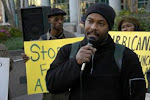
By Jeremy Scahill
Obama’s Favorite Think Tank Buddies Are Hosting a Pro-War Party April 3. They And Their Neocon Pals Are Gonna Tell Those Afghans How Good This War Will Be For Them.
The Center for American Progress, which was founded by former Clinton chief of staff John Podesta in 2003, masqueraded as a “progressive,” semi-anti-war organization through the dark years of the Bush administration when it required little political courage to oppose the White House and wars that were portrayed as Bush’s or the Republicans’. While feigning opposition to the Iraq war, CAP refused to confront Democrats over their continued funding of that war. After Obama’s election, Podesta, of course, headed the transition team, which swiftly appointed hawkish Democrats from the Clinton era, kept on Robert Gates and other Republicans, sidelined progressives and in doing so won praise from neocons and other Republicans. Now that “their” guys—big “D” Democrats—are back in power, CAP has assumed its rightful place as a partisan front group for the Democratic Party’s power structure and for selling Obama’s wars to “progressives.”
As John Stauber, head of the Center for Media and Democracy, has pointed out, CAP “strongly supports Barack Obama’s escalation of the US wars in Afghanistan and Pakistan.” This week, CAP is officially unveiling its manifesto in support of Obama’s aggression against Afghanistan—a report called “Sustainable Security in Afghanistan: Crafting an Effective and Responsible Strategy for the Forgotten Front.” CAP uses the language of Empire—US interests, US national power— in describing its report, saying it is “the product of the Center’s review of U.S interests, goals, and strategy in Afghanistan and the region. Bearing in mind the vital U.S interests in the country and South Asia, the report concludes that the United States must attempt to build a national representative government that is able to govern, defend, and sustain itself. The report argues that reaching the ultimate objective of a resilient Afghan state will require a comprehensive and long-term approach that uses all elements of U.S national power.”
On April 3, CAP is hosting a little release party for the report in the form of a public discussion arrogantly titled, “A New Way Forward in Afghanistan,” which includes a leading neoconservative activist, Frederick Kagan, one of the lead proponents of the “surge” in Iraq. In addition to being a “Resident Scholar” at the American Enterprise Institute, which was basically Dick Cheney’s bunker away from the bunker in the 1990s, Kagan was also a major figure in advocating the agenda of the neocon-Project for a New American Century, which molded the Bush administration’s conquistador foreign policy. Kagan’s brother Robert along with his loony-bin necon buddy William Kristol started a new version of PNAC a few weeks ago, called the Foreign Policy Initiative. Another key figure in the group is Dan Senor (who is married to CNN’s Campbell Brown), formerly L. Paul Bremer’s righthand in Iraq and a generally repulsive character. FPI’s primary objective thus far seems to be supporting Obama’s Afghanistan policy and encouraging it to get even more violent and bloody and open ended. Great bunch of fellas, really. See here and here for more on FPI.
In fact, FPI promoted the CAP Afghanistan event in its daily email digest on April 2.
So, rather than finding itself allied with anti-war groups and actually advocating a progressive agenda, CAP is turning to these vile neocons to declare “A New Way Forward in Afghanistan.”
Tuesday, April 7, 2009


Monday, April 6, 2009
End Cuba isolation, Castro urges
Fidel Castro has called on Latin American countries to support an end to Cuba's isolation when they meet the US president at a regional summit.
Cuba is not invited to attend the Summit of the Americas, which opens in Trinidad and Tobago on 17 April.
In a newspaper editorial, the former president said that the summit would be a "trial by fire" for the region.
He urged leaders to ensure that both Cuba's isolation and the US trade embargo against it were on the agenda.
Almost all the countries in Latin America and the Caribbean now support an end to the embargo and want Cuba re-admitted to the organisation of American states, says the BBC's Michael Voss, in Havana.
Mr Castro said that he had seen a draft text of the final statement which the US wants to be signed at the summit.
It contained "a great number of inadmissible concepts", he wrote, and did not acknowledge the calls for better Cuba-US ties.
"Who is now demanding our exclusion? Perhaps they don't understand that times of exclusionary agreements against our people have been left far behind," he wrote.
US President Barack Obama has taken a less confrontational approach to the communist nation than his predecessor, George W Bush, our correspondent adds.
But his administration continues to insist that there must be progress towards democracy and on human rights before the trade embargo can be lifted.
The US began imposing restrictions on Cuba after Mr Castro took power in 1959, making it the only Communist state in the Americas - and a Cold War flashpoint.
Mr Castro's younger brother, Raul, formally took over the presidency from him in February last year.
Story from BBC NEWS:
http://news.bbc.co.uk/go/pr/fr/-/2/hi/americas/7984850.stm
Published: 2009/04/06 01:29:22 GMT
Cuba is not invited to attend the Summit of the Americas, which opens in Trinidad and Tobago on 17 April.
In a newspaper editorial, the former president said that the summit would be a "trial by fire" for the region.
He urged leaders to ensure that both Cuba's isolation and the US trade embargo against it were on the agenda.
Almost all the countries in Latin America and the Caribbean now support an end to the embargo and want Cuba re-admitted to the organisation of American states, says the BBC's Michael Voss, in Havana.
Mr Castro said that he had seen a draft text of the final statement which the US wants to be signed at the summit.
It contained "a great number of inadmissible concepts", he wrote, and did not acknowledge the calls for better Cuba-US ties.
"Who is now demanding our exclusion? Perhaps they don't understand that times of exclusionary agreements against our people have been left far behind," he wrote.
US President Barack Obama has taken a less confrontational approach to the communist nation than his predecessor, George W Bush, our correspondent adds.
But his administration continues to insist that there must be progress towards democracy and on human rights before the trade embargo can be lifted.
The US began imposing restrictions on Cuba after Mr Castro took power in 1959, making it the only Communist state in the Americas - and a Cold War flashpoint.
Mr Castro's younger brother, Raul, formally took over the presidency from him in February last year.
Story from BBC NEWS:
http://news.bbc.co.uk/go/pr/fr/-/2/hi/americas/7984850.stm
Published: 2009/04/06 01:29:22 GMT
Saturday, April 4, 2009
OECD estimates USD 11 trillion parked in tax havens
London, Apr 3 (PTI) The OECD has estimated that about USD 11 trillion, more than 10 times the amount committed by G-20 leaders to revive the world economy, is held in tax havens, even as it released the black list of non-cooperative nations.
Estimates of the value of assets held in tax havens range from USD 1.7 trillion to USD 11.5 trillion, the Organisation for Economic Cooperation and Development (OECD) said while naming Malaysia, the Philippines, Uruguay and Costa Rica as countries that have not agreed to implement international tax standards.
Mauritius, the country from where large amounts of investments are routed to India, figures among the nations that have substantially implemented tax standards.
Among the countries that have committed themselves to the internationally agreed tax standards but have not yet implemented them are Singapore, Switzerland, Bahamas, Bermuda, British Virgin Islands, and Cayman islands.
The OECD, which is a grouping of developed nations, released the list of blacklisted countries soon after the G-20 leaders announced a plan impose sanctions against tax havens.
"This is the start of the end because country after country is now signing up to the principles that have been set forward internationally. The principle is that you got to be prepared to exchange information about tax," UK Prime Minister Gorden Brown told reporters after the summit.
PTI http://www.ptinews.com/pti%5Cptisite.nsf/$All/414D6111AE8483DA6525758D0029209D?OpenDocument
Estimates of the value of assets held in tax havens range from USD 1.7 trillion to USD 11.5 trillion, the Organisation for Economic Cooperation and Development (OECD) said while naming Malaysia, the Philippines, Uruguay and Costa Rica as countries that have not agreed to implement international tax standards.
Mauritius, the country from where large amounts of investments are routed to India, figures among the nations that have substantially implemented tax standards.
Among the countries that have committed themselves to the internationally agreed tax standards but have not yet implemented them are Singapore, Switzerland, Bahamas, Bermuda, British Virgin Islands, and Cayman islands.
The OECD, which is a grouping of developed nations, released the list of blacklisted countries soon after the G-20 leaders announced a plan impose sanctions against tax havens.
"This is the start of the end because country after country is now signing up to the principles that have been set forward internationally. The principle is that you got to be prepared to exchange information about tax," UK Prime Minister Gorden Brown told reporters after the summit.
PTI http://www.ptinews.com/pti%5Cptisite.nsf/$All/414D6111AE8483DA6525758D0029209D?OpenDocument
OECD names and shames tax havens
The Organisation for Economic Cooperation and Development (OECD) has published its blacklist of non-cooperative tax havens.
Costa Rica, Malaysia, and the Philippines are the countries listed as not having agreed to tax standards.
Uruguay had originally been listed too, but later protested that it had been wrongly included.
After listening to its arguments the OECD said it was happy the country had agreed to its tax transparency rules.
The list is part of efforts agreed at the G20 summit to clamp down on havens.
There is also a list of 38 places that have agreed to improve standards but not yet done so, such as Gibraltar, Liechtenstein, Andorra and San Marino.
'Willing to co-operate'
On Thursday, G20 leaders agreed to take sanctions against tax havens using the OECD list as its basis.
In their communique, they agreed, "to take action against non-cooperative jurisdictions, including tax havens".
"We stand ready to deploy sanctions to protect our public finances and financial systems. The era of banking secrecy is over."
Uruguay had objected to its inclusion on the list, published earlier on Friday.
The South American country sent a letter to Angel Gurria, secretary-general of the OECD, from its finance minister Alvaro García.
He informed the OECD that Uruguay had formally endorsed the body's standards on transparency and exchange of information.
"I am pleased that Uruguay joins a growing number of nations willing to co-operate in fighting tax evasion and other tax abuses," said Mr Gurria.
Pressure
Angel Gurria, secretary general of the OECD, said that the G20 summit had helped to focus minds on the issue of tax havens.
“ There were frosty negotiations between France and China over the inclusion of Macau ”
Paul Mason, BBC Two Newsnight economics editor
"We've had more progress in the last two weeks on this matter than we've had in the last 10 or 12 years," he told the BBC.
He added that the progress had come despite the leaders not specifying what sanctions they would take.
"[Non-cooperating countries] will move because they know the question of sanctions, however ill-defined that was, is going to affect them somehow."
The Philippines is already reported to be taking steps to remove itself from the blacklist.
"The Philippine government would take the necessary steps to ensure we meet their expectations," Trade Secretary Peter Favila told the Associated Press news agency.
"It is really up to us to prove them wrong."
Malaysian Prime Minister Najib Razak said that his country should not be on the blacklist at all.
"We should not be in that category as, in practice, we have been committed to OECD requirements," he said in a statement.
Story from BBC NEWS:
http://news.bbc.co.uk/go/pr/fr/-/2/hi/business/7980848.stm
Published: 2009/04/03 22:04:55 GMT
Costa Rica, Malaysia, and the Philippines are the countries listed as not having agreed to tax standards.
Uruguay had originally been listed too, but later protested that it had been wrongly included.
After listening to its arguments the OECD said it was happy the country had agreed to its tax transparency rules.
The list is part of efforts agreed at the G20 summit to clamp down on havens.
There is also a list of 38 places that have agreed to improve standards but not yet done so, such as Gibraltar, Liechtenstein, Andorra and San Marino.
'Willing to co-operate'
On Thursday, G20 leaders agreed to take sanctions against tax havens using the OECD list as its basis.
In their communique, they agreed, "to take action against non-cooperative jurisdictions, including tax havens".
"We stand ready to deploy sanctions to protect our public finances and financial systems. The era of banking secrecy is over."
Uruguay had objected to its inclusion on the list, published earlier on Friday.
The South American country sent a letter to Angel Gurria, secretary-general of the OECD, from its finance minister Alvaro García.
He informed the OECD that Uruguay had formally endorsed the body's standards on transparency and exchange of information.
"I am pleased that Uruguay joins a growing number of nations willing to co-operate in fighting tax evasion and other tax abuses," said Mr Gurria.
Pressure
Angel Gurria, secretary general of the OECD, said that the G20 summit had helped to focus minds on the issue of tax havens.
“ There were frosty negotiations between France and China over the inclusion of Macau ”
Paul Mason, BBC Two Newsnight economics editor
"We've had more progress in the last two weeks on this matter than we've had in the last 10 or 12 years," he told the BBC.
He added that the progress had come despite the leaders not specifying what sanctions they would take.
"[Non-cooperating countries] will move because they know the question of sanctions, however ill-defined that was, is going to affect them somehow."
The Philippines is already reported to be taking steps to remove itself from the blacklist.
"The Philippine government would take the necessary steps to ensure we meet their expectations," Trade Secretary Peter Favila told the Associated Press news agency.
"It is really up to us to prove them wrong."
Malaysian Prime Minister Najib Razak said that his country should not be on the blacklist at all.
"We should not be in that category as, in practice, we have been committed to OECD requirements," he said in a statement.
Story from BBC NEWS:
http://news.bbc.co.uk/go/pr/fr/-/2/hi/business/7980848.stm
Published: 2009/04/03 22:04:55 GMT
South Africa leader welcomes G20
Notice the tragic comedy and irony. South Africa is NOT in a recession, even though it's official unemployment is over 20%.
- Kali
South Africa's leader Kgalema Motlanthe has said the G20 summit had taken some decisive and courageous steps.
The world leaders pledged $100bn in aid for developing countries and promised to give more voice to developing countries in economic decision-making.
Mr Motlanthe said the deal focused on ways to avoid unemployment and acknowledged the importance of emerging markets to boost trade.
But it might not be adequate to address the full extent of the crisis, he said.
South Africa, which has so far avoided a recession, is the only African country in the G20.
“ You can't shave somebody's head in his absence... In an almost 30-page communique, Africa is not even mentioned ”
Kenyan economist Oduor Ong'wen
"We have as the central pillar of the recovery plan the saving of jobs because there's a recognition that this summit could not only focus on technical aspects of the economy but that the economic meltdown affects people, affects ordinary working people," the South African president said.
Economists have been warning that up to 300,000 jobs could be lost this year, pushing South Africa's unemployment up from the current level of 22%.
Other developing countries have suffered from a downturn in tourism, remittances from workers living abroad, and the collapse of commodity prices.
'Fire-fighting'
"I don't see much in terms of rescue for Africa," Kenyan economist Oduor Ong'wen of the the Southern and Eastern African Trade Information and Negotiations Institute told the BBC's Network Africa.
NEW FUNDING PLEDGES
$500bn for the IMF to lend to struggling economies
$250bn to boost world trade
$250bn for a new IMF "overdraft facility" countries can draw on
$100bn that international development banks can lend to poorest countries
IMF will raise $6bn from selling gold reserves to increase lending for the poorest countries Source: BBC
"You can't shave somebody's head in his absence... In an almost 30 page communique, Africa is not even mentioned.
"In as far as it is fire-fighting it is OK, but we have to go behind what caused the fire," he said.
But Stephen Gelb, executive director of South Africa's Edge Institute think tank, says as well as the aid package, the $750bn to the International Monetary Fund and the $250bn to boost global trade will have an impact on Africa.
"It will make a rapid difference to the flow of trade because trade has been suffering from a lack of credit to importers and exporters," he told the BBC.
He said his greatest fear is protectionism, which has been creeping in despite promises from richer nations not to do so.
Nigerian businessman John Adeleke sees the tripling of the IMF's funds as a mistake.
"I think some of the most successful developing countries have advanced in spite of the IMF and a lot of the failures have been failures that were perhaps mismanaged by a lot of the [IMF] advice," he told the BBC's World Today.
In a speech after the summit, US President Barack Obama announced that he aims to double US food and agriculture aid to Africa and other poor regions to more than $1bn.
Story from BBC NEWS:
http://news.bbc.co.uk/go/pr/fr/-/2/hi/africa/7980910.stm
Published: 2009/04/03 10:19:31 GMT
- Kali
South Africa's leader Kgalema Motlanthe has said the G20 summit had taken some decisive and courageous steps.
The world leaders pledged $100bn in aid for developing countries and promised to give more voice to developing countries in economic decision-making.
Mr Motlanthe said the deal focused on ways to avoid unemployment and acknowledged the importance of emerging markets to boost trade.
But it might not be adequate to address the full extent of the crisis, he said.
South Africa, which has so far avoided a recession, is the only African country in the G20.
“ You can't shave somebody's head in his absence... In an almost 30-page communique, Africa is not even mentioned ”
Kenyan economist Oduor Ong'wen
"We have as the central pillar of the recovery plan the saving of jobs because there's a recognition that this summit could not only focus on technical aspects of the economy but that the economic meltdown affects people, affects ordinary working people," the South African president said.
Economists have been warning that up to 300,000 jobs could be lost this year, pushing South Africa's unemployment up from the current level of 22%.
Other developing countries have suffered from a downturn in tourism, remittances from workers living abroad, and the collapse of commodity prices.
'Fire-fighting'
"I don't see much in terms of rescue for Africa," Kenyan economist Oduor Ong'wen of the the Southern and Eastern African Trade Information and Negotiations Institute told the BBC's Network Africa.
NEW FUNDING PLEDGES
$500bn for the IMF to lend to struggling economies
$250bn to boost world trade
$250bn for a new IMF "overdraft facility" countries can draw on
$100bn that international development banks can lend to poorest countries
IMF will raise $6bn from selling gold reserves to increase lending for the poorest countries Source: BBC
"You can't shave somebody's head in his absence... In an almost 30 page communique, Africa is not even mentioned.
"In as far as it is fire-fighting it is OK, but we have to go behind what caused the fire," he said.
But Stephen Gelb, executive director of South Africa's Edge Institute think tank, says as well as the aid package, the $750bn to the International Monetary Fund and the $250bn to boost global trade will have an impact on Africa.
"It will make a rapid difference to the flow of trade because trade has been suffering from a lack of credit to importers and exporters," he told the BBC.
He said his greatest fear is protectionism, which has been creeping in despite promises from richer nations not to do so.
Nigerian businessman John Adeleke sees the tripling of the IMF's funds as a mistake.
"I think some of the most successful developing countries have advanced in spite of the IMF and a lot of the failures have been failures that were perhaps mismanaged by a lot of the [IMF] advice," he told the BBC's World Today.
In a speech after the summit, US President Barack Obama announced that he aims to double US food and agriculture aid to Africa and other poor regions to more than $1bn.
Story from BBC NEWS:
http://news.bbc.co.uk/go/pr/fr/-/2/hi/africa/7980910.stm
Published: 2009/04/03 10:19:31 GMT
Friday, April 3, 2009
The April Fools Agreement: the G20 Summit, NATO and the Durban Review Conference
Fairly cogent analysis of the April Fools agreement.
Now that the capital reforming meeting is over, Obama is now trying to reconsolidate imperialism's chief military coalition, NATO. All the while he and his administration are working diligently to undermine the third major meeting being held in old imperial Europe in April, the Durban Review Conference (DRC).
To date the administration has outflanked the Non-Aligned Movement/G77, one of the main forces behind the DRC/WCAR, and got the DRC committee to water down the Outcome Document (removing all mention of reparations) and organize as many as 52 nation-states (mainly from the EU) to potentially boycott the conference if it conference doesn't denounce the Durban Declaration and Plan of Action in 2001 in its entirety (which took strong positions on reparations, indigenous sovereignty, Palestinian self-determination, and caste).
We cannot allow Obama and the imperial camp to get away with this. We need act. To that end, I want to suggest the following:
1. Organize a demonstration, teach-in or forum on the Durban Review Conference and the Durban Declaration and Plan of Action between now and April 25th.
2. Sign and promote the following petitions:
- Black Left Unity Petition http://www.petitiononline.com/Durbanii/petition.html
- Human Rights Project at the Urban Justice Center http://www.thepetitionsit.com/1/why-the-united-states-should-stop-refusing-to-participate-in-a-global-conference-on-racism
3. Support the National Day of Action being organized by TransAfrica Forum and call the Obama Administration on Wednesday, April 8th to demand that the administration attend the conference and adopt the Durban Declaration and Plan of Action.
4. Incorporate the Durban Declaration and Plan of Action and the 2008 Committee to Eliminate Racial Discrimination (CERD) recommendations into your organizations local, regional, and national plans of action.
5. Engage in CERD compliance monitoring and documentation locally, regionally, and nationally.
6. Stay informed. Checkout the United Against Racism Facebook Page regularly for updates and action items at http://www.facebook.com/group.php?gid=68920846409&ref=ts
7. Join the US Human Rights Network (USHRN) to build a peoples centered human rights movement in the United States.
In Unity and Struggle,
Kali
------------------------------------
A summit that shows the new balance of power
New alliances are forming, old ideologies are dying, the world is now a different place. Mary Dejevsky looks at the lessons of the G20
Friday, 3 April 2009
Multilateralism and its institutions are back
Not only did the leaders of the 20 richest countries in the world all find time in their diaries to come to London, but most of the action they announced yesterday is to be channelled through existing international organisations – chiefly the IMF and the World Bank. If everyone honours their pledges, institutions that seemed on the verge of redundancy only a few years ago will soon find themselves awash with new cash and new responsibilities. They will be under pressure to restructure themselves in line with their new remit. The Bush-era contempt for the UN and other multilateral forums is a thing of the past. At least for now.
The ultra free market is no longer dogma
In saying as baldly as he did yesterday that "the Washington consensus is over", Gordon Brown effectively rejected, on behalf of the whole G20, the ultra free-market dogmatism that the US and Britain liked to preach after the collapse of communism. The IMF and World Bank had already started to distance themselves from the idea that countries seeking their assistance should be encouraged, or required, to adopt free-market mechanisms on the US model. But the outcome of the London summit is the clearest signal yet that the US model inherited from the Clinton and Bush years will be regarded as one way of doing things, alongside others. In the new world order, economic transparency, accountability and effectiveness will also be considered virtues.
The US is becoming just another big country
We do not know exactly what went on inside the ExCel centre. Beyond it, though, all eyes were on Barack and Michelle Obama. Separately and together, they were the couple the crowds turned out to see. President Obama was the national leader most in demand for bilateral meetings, starting with breakfast, a round of talks and a long-ish press conference at No 10. From what we know about preparations for the summit, and from the communiqué, however, the voice of the United States was one, albeit an influential one, among others.
In London, Mr Obama's celebrity status seems not to have translated into diplomatic weight. This may reflect the "listening" stance he has adopted in contrast to his predecessor's air of certainty. It could reflect the US economic plight or, more prosaically, it could simply be because he has yet to appoint many Treasury and State Department officials. But it could also be a sign of new times. By inclination or by necessity, the post-Bush United States seems to see its place in the world a little differerently: less American exceptionalism, more consensus-seeking. In the G20, the presence of China, India and Indonesia, among others, gives a foretaste of a future world order.
The special relationship is a thing of the past
Mr Brown was the first European leader to meet Mr Obama in Washington after his election and the first European leader to receive the new President on his home territory. The small irritations that came to light after the Washington trip – the lack of a full-dress press conference, the brevity of the meeting, the presents – were all thoroughly laid to rest in London. What was also clear, though, ws that Mr Obama exercises his bonhomie without special favours. Britain must get used to the idea of being one friend among many others.
The US and Russia pushed the reset button
Relations between the US and Russia, good or bad, are not going to dominate the new world order. But the poor state of relations in the later Bush years was a liability to both, hindering US diplomacy in several parts of the world and distracting Russian leaders from urgent business at home.
Mr Obama and Mr Medvedev, both lawyers incidentally and of a similar age, struck a new tone at their London meeting. A July summit lies ahead, along with that old stalwart of Soviet days, talks on nuclear arms control, with a view to replacing or extending the START treaty which expires at the end of the year. The US anti-missile installations planned for deployment in Poland and the Czech Republic appear to have been put on hold, as have Russia's counter-deployments in Kaliningrad. The broad smiles on both men's faces at the end of their meeting suggested a cordiality, on a personal level at least, not seen in US-Russian relations for 20 years. It may be too soon to count on a joint approach to Iran, Afghanistan or Iraq. But warmer relations could prevent the sort of stand-off in Georgia last August that came dangerously close to war.
'Old Europe' made its voice heard
The European Union is often criticised, including by its friends, for not exercising international clout commensurate with its political and economic strength. And the split between "old" and "new" Europe on a plethora of issues, including the US, Russia, economic models and Iraq, was debilitating.
With many "new" Europeans suffering disproportionately from the economic crisis and a new mood radiating from Washington, however, the divisions have narrowed. When the French and German leaders jointly set out their demands for tougher financial regulation on Wednesday, they could claim to be speaking with a European voice. Some even likened them to an opposition. Even if their demarche was mainly directed to their home audiences, it put Europe on the diplomatic map – where it is very likely to stay.
China made its shy debut as a rising power
Right up there with Barack Obama as the international leader most indemand for bilateral meetings was Hu Jintao, President of China. Even so, he kept a low profile; fitting in, saying nothing out of turn. There was an ambivalence that suggested uncertainty about how to handle growing power. Before the summit, China had backed a proposal for a new international reserve currency – an idea whose time may yet come. It had also fended off another US demand for it to reduce the trade imbalance by revaluing its currency. In London, China's rise was treated by everyone else as inevitable, if not already a fact. President Hu still seemed desperate not to scare the horses.
Britain has a future as host to the world
A parochial post script. It was all going to be an ill-temperered disaster; draft communiqués, M. Sarkozy complained, were crossing his desk by the hour. In the event, there were smiles, the sun shone, the roads were clear, there were drinks with the Queen, dinner at Downing Street – and an agreement that satisfied even the French. So, not a disaster at all.
Now that the capital reforming meeting is over, Obama is now trying to reconsolidate imperialism's chief military coalition, NATO. All the while he and his administration are working diligently to undermine the third major meeting being held in old imperial Europe in April, the Durban Review Conference (DRC).
To date the administration has outflanked the Non-Aligned Movement/G77, one of the main forces behind the DRC/WCAR, and got the DRC committee to water down the Outcome Document (removing all mention of reparations) and organize as many as 52 nation-states (mainly from the EU) to potentially boycott the conference if it conference doesn't denounce the Durban Declaration and Plan of Action in 2001 in its entirety (which took strong positions on reparations, indigenous sovereignty, Palestinian self-determination, and caste).
We cannot allow Obama and the imperial camp to get away with this. We need act. To that end, I want to suggest the following:
1. Organize a demonstration, teach-in or forum on the Durban Review Conference and the Durban Declaration and Plan of Action between now and April 25th.
2. Sign and promote the following petitions:
- Black Left Unity Petition http://www.petitiononline.com/Durbanii/petition.html
- Human Rights Project at the Urban Justice Center http://www.thepetitionsit.com/1/why-the-united-states-should-stop-refusing-to-participate-in-a-global-conference-on-racism
3. Support the National Day of Action being organized by TransAfrica Forum and call the Obama Administration on Wednesday, April 8th to demand that the administration attend the conference and adopt the Durban Declaration and Plan of Action.
4. Incorporate the Durban Declaration and Plan of Action and the 2008 Committee to Eliminate Racial Discrimination (CERD) recommendations into your organizations local, regional, and national plans of action.
5. Engage in CERD compliance monitoring and documentation locally, regionally, and nationally.
6. Stay informed. Checkout the United Against Racism Facebook Page regularly for updates and action items at http://www.facebook.com/group.php?gid=68920846409&ref=ts
7. Join the US Human Rights Network (USHRN) to build a peoples centered human rights movement in the United States.
In Unity and Struggle,
Kali
------------------------------------
A summit that shows the new balance of power
New alliances are forming, old ideologies are dying, the world is now a different place. Mary Dejevsky looks at the lessons of the G20
Friday, 3 April 2009
Multilateralism and its institutions are back
Not only did the leaders of the 20 richest countries in the world all find time in their diaries to come to London, but most of the action they announced yesterday is to be channelled through existing international organisations – chiefly the IMF and the World Bank. If everyone honours their pledges, institutions that seemed on the verge of redundancy only a few years ago will soon find themselves awash with new cash and new responsibilities. They will be under pressure to restructure themselves in line with their new remit. The Bush-era contempt for the UN and other multilateral forums is a thing of the past. At least for now.
The ultra free market is no longer dogma
In saying as baldly as he did yesterday that "the Washington consensus is over", Gordon Brown effectively rejected, on behalf of the whole G20, the ultra free-market dogmatism that the US and Britain liked to preach after the collapse of communism. The IMF and World Bank had already started to distance themselves from the idea that countries seeking their assistance should be encouraged, or required, to adopt free-market mechanisms on the US model. But the outcome of the London summit is the clearest signal yet that the US model inherited from the Clinton and Bush years will be regarded as one way of doing things, alongside others. In the new world order, economic transparency, accountability and effectiveness will also be considered virtues.
The US is becoming just another big country
We do not know exactly what went on inside the ExCel centre. Beyond it, though, all eyes were on Barack and Michelle Obama. Separately and together, they were the couple the crowds turned out to see. President Obama was the national leader most in demand for bilateral meetings, starting with breakfast, a round of talks and a long-ish press conference at No 10. From what we know about preparations for the summit, and from the communiqué, however, the voice of the United States was one, albeit an influential one, among others.
In London, Mr Obama's celebrity status seems not to have translated into diplomatic weight. This may reflect the "listening" stance he has adopted in contrast to his predecessor's air of certainty. It could reflect the US economic plight or, more prosaically, it could simply be because he has yet to appoint many Treasury and State Department officials. But it could also be a sign of new times. By inclination or by necessity, the post-Bush United States seems to see its place in the world a little differerently: less American exceptionalism, more consensus-seeking. In the G20, the presence of China, India and Indonesia, among others, gives a foretaste of a future world order.
The special relationship is a thing of the past
Mr Brown was the first European leader to meet Mr Obama in Washington after his election and the first European leader to receive the new President on his home territory. The small irritations that came to light after the Washington trip – the lack of a full-dress press conference, the brevity of the meeting, the presents – were all thoroughly laid to rest in London. What was also clear, though, ws that Mr Obama exercises his bonhomie without special favours. Britain must get used to the idea of being one friend among many others.
The US and Russia pushed the reset button
Relations between the US and Russia, good or bad, are not going to dominate the new world order. But the poor state of relations in the later Bush years was a liability to both, hindering US diplomacy in several parts of the world and distracting Russian leaders from urgent business at home.
Mr Obama and Mr Medvedev, both lawyers incidentally and of a similar age, struck a new tone at their London meeting. A July summit lies ahead, along with that old stalwart of Soviet days, talks on nuclear arms control, with a view to replacing or extending the START treaty which expires at the end of the year. The US anti-missile installations planned for deployment in Poland and the Czech Republic appear to have been put on hold, as have Russia's counter-deployments in Kaliningrad. The broad smiles on both men's faces at the end of their meeting suggested a cordiality, on a personal level at least, not seen in US-Russian relations for 20 years. It may be too soon to count on a joint approach to Iran, Afghanistan or Iraq. But warmer relations could prevent the sort of stand-off in Georgia last August that came dangerously close to war.
'Old Europe' made its voice heard
The European Union is often criticised, including by its friends, for not exercising international clout commensurate with its political and economic strength. And the split between "old" and "new" Europe on a plethora of issues, including the US, Russia, economic models and Iraq, was debilitating.
With many "new" Europeans suffering disproportionately from the economic crisis and a new mood radiating from Washington, however, the divisions have narrowed. When the French and German leaders jointly set out their demands for tougher financial regulation on Wednesday, they could claim to be speaking with a European voice. Some even likened them to an opposition. Even if their demarche was mainly directed to their home audiences, it put Europe on the diplomatic map – where it is very likely to stay.
China made its shy debut as a rising power
Right up there with Barack Obama as the international leader most indemand for bilateral meetings was Hu Jintao, President of China. Even so, he kept a low profile; fitting in, saying nothing out of turn. There was an ambivalence that suggested uncertainty about how to handle growing power. Before the summit, China had backed a proposal for a new international reserve currency – an idea whose time may yet come. It had also fended off another US demand for it to reduce the trade imbalance by revaluing its currency. In London, China's rise was treated by everyone else as inevitable, if not already a fact. President Hu still seemed desperate not to scare the horses.
Britain has a future as host to the world
A parochial post script. It was all going to be an ill-temperered disaster; draft communiqués, M. Sarkozy complained, were crossing his desk by the hour. In the event, there were smiles, the sun shone, the roads were clear, there were drinks with the Queen, dinner at Downing Street – and an agreement that satisfied even the French. So, not a disaster at all.
Thursday, April 2, 2009
US jobless claims surge to new high
THURSDAY, APRIL 02, 2009
20:55 MECCA TIME, 17:55 GMT
Unemployment is rising as the US struggles with a recession [AFP]
The number of US workers filing new claims for unemployment benefits has surged to its highest level for more than 26 years, according to a government report.
Initial claims for unemployment insurance rose to 669,000 from 657,000 the previous week, the Labour Department said on Thursday, the highest number since October 1982.
The number of unemployed workers claiming benefits for more than a week rose 161,000 to reach 5.73 million, the report said.
A record 32.2 million people, one-in-10 Americans, are now receiving food stamps, the government also said on Thursday.
Food stamps are the major US government programme used to combat hunger and help the poor buy food.
The average benefit was $112.82 per person in January.
"A weakened economy means that many more individuals are turning to SNAP/Food Stamps," said the Food Research and Action Center, an anti-hunger group, using the acronym for the renamed food stamp programme, Supplemental Nutrition Assistance Program.
The US economy is struggling in a recession that many say is the worst economic crisis since the 1930s.
Positive signs
Food stamp benefits are set to rise by 13 per cent this month temporarily, under the economic stimulus law signed by Barack Obama, the US president.
The increase equals $80 a month for a household of four.
The Commerce Department also said on Thursday that new orders received by US factories rose in February, ending a six-month series of declines.
Economists said the jobless data indicated the serious challenges that remain if the ailing US economy is to be revived.
"It would be an exaggeration to call this a firm rebuttal of the better (economic) data of recent weeks, but it is nonetheless quite striking," said Ian Shepherdson, the chief US economist at High Frequency Economics.
"Claims are typically one of the very first indicators to signal economic recovery and there is no sign of that in the data yet."
20:55 MECCA TIME, 17:55 GMT
Unemployment is rising as the US struggles with a recession [AFP]
The number of US workers filing new claims for unemployment benefits has surged to its highest level for more than 26 years, according to a government report.
Initial claims for unemployment insurance rose to 669,000 from 657,000 the previous week, the Labour Department said on Thursday, the highest number since October 1982.
The number of unemployed workers claiming benefits for more than a week rose 161,000 to reach 5.73 million, the report said.
A record 32.2 million people, one-in-10 Americans, are now receiving food stamps, the government also said on Thursday.
Food stamps are the major US government programme used to combat hunger and help the poor buy food.
The average benefit was $112.82 per person in January.
"A weakened economy means that many more individuals are turning to SNAP/Food Stamps," said the Food Research and Action Center, an anti-hunger group, using the acronym for the renamed food stamp programme, Supplemental Nutrition Assistance Program.
The US economy is struggling in a recession that many say is the worst economic crisis since the 1930s.
Positive signs
Food stamp benefits are set to rise by 13 per cent this month temporarily, under the economic stimulus law signed by Barack Obama, the US president.
The increase equals $80 a month for a household of four.
The Commerce Department also said on Thursday that new orders received by US factories rose in February, ending a six-month series of declines.
Economists said the jobless data indicated the serious challenges that remain if the ailing US economy is to be revived.
"It would be an exaggeration to call this a firm rebuttal of the better (economic) data of recent weeks, but it is nonetheless quite striking," said Ian Shepherdson, the chief US economist at High Frequency Economics.
"Claims are typically one of the very first indicators to signal economic recovery and there is no sign of that in the data yet."
Subscribe to:
Posts (Atom)

 Posts
Posts